Understanding Piaget's Theory: Cognitive Development in Early Childhood Education
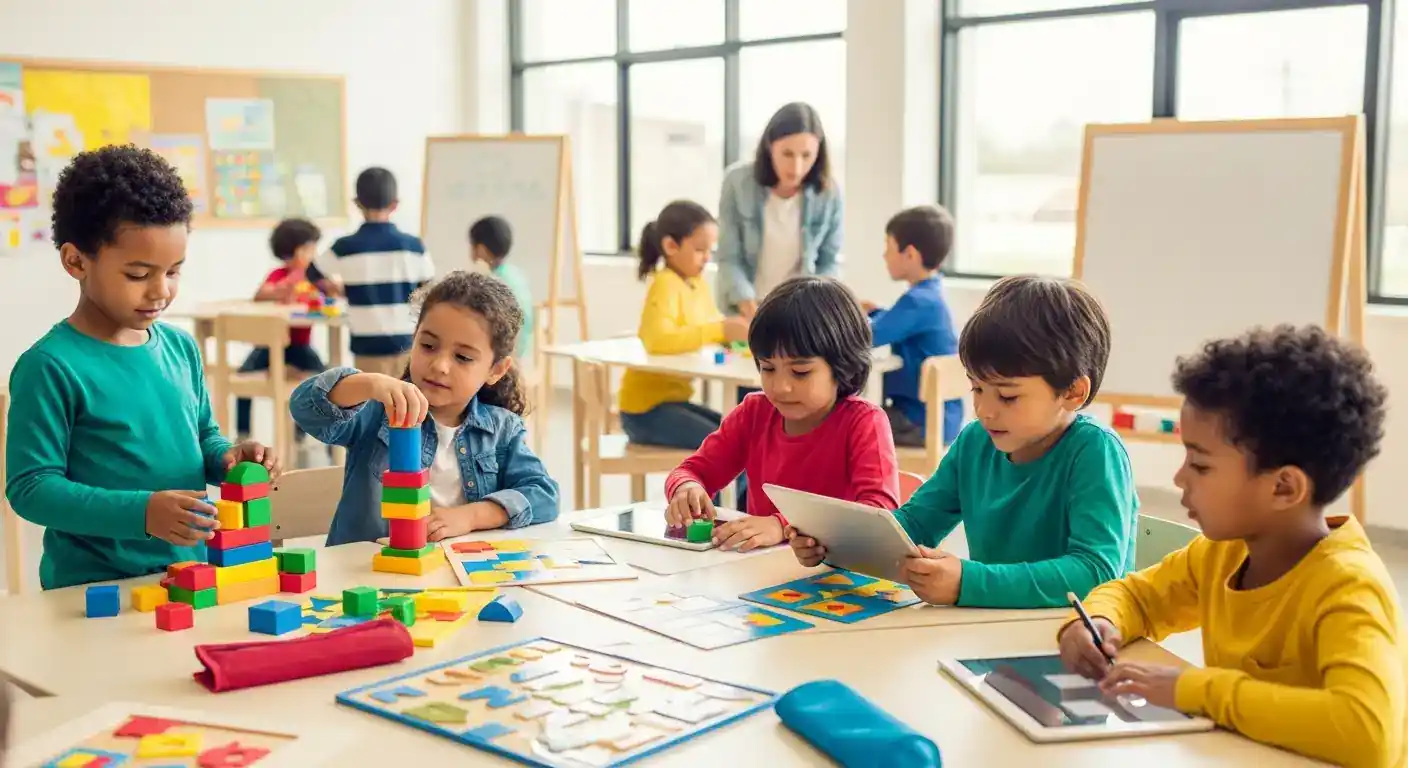
Jean Piaget's groundbreaking work on cognitive development has profoundly influenced our understanding of how children learn, particularly during their formative early years. His theories offer invaluable insights for educators, parents, and anyone involved in early childhood education, providing a framework to support and nurture a child's intellectual growth. By understanding the stages of cognitive development as proposed by Piaget, educators can better tailor their teaching methods to meet the unique needs of young learners, fostering a more effective and engaging learning environment.
This article delves into Piaget's core concepts, exploring each stage and its implications for early childhood education. We will examine how his theory informs pedagogical practices and offers practical strategies for supporting cognitive growth in young children.
Key Points:
- Stages of Development: Piaget identified distinct, sequential stages children pass through as their thinking matures.
- Constructivist Approach: Children actively construct their understanding of the world through experience.
- Schema: Mental frameworks that help organize and interpret information.
- Adaptation: The process of adjusting schemas through assimilation and accommodation.
- Early Childhood Focus: Emphasis on sensorimotor and preoperational stages and their educational relevance.
Piaget's Core Concepts in Early Childhood Education
At the heart of Piaget's theory of cognitive development lies the idea that children are not passive recipients of information but active learners who construct their own knowledge. This constructivist perspective is fundamental to modern early childhood education. Piaget proposed that children move through a series of distinct stages, each characterized by different ways of thinking and understanding the world. These stages are universal and occur in a fixed order, building upon one another.
Schemas: The Building Blocks of Thought
A schema is a mental representation or framework that helps individuals organize and interpret information. Think of them as mental blueprints or categories that guide our understanding of the world. For instance, a baby's initial schema for "dog" might be very simple, perhaps just a furry creature that barks. As the child encounters more dogs of different sizes and breeds, their schema for "dog" becomes more complex and nuanced.
Adaptation: Growing Through Experience
Children adapt their existing schemas or create new ones through two key processes:
- Assimilation: This occurs when a child incorporates new information into their existing schemas. For example, a child who has a schema for "cat" might see a small, fluffy dog and try to fit it into their existing "cat" schema, perhaps calling it a "kitty."
- Accommodation: This happens when a child modifies their existing schemas or creates new ones to better fit new information. When the child realizes the "kitty" doesn't meow like a cat but barks like a dog, they might need to accommodate this new information, perhaps developing a new schema for "dog" or refining their existing one.
Equilibration: The Drive for Balance
Piaget believed that children are driven by an innate desire to achieve equilibrium, a state of mental balance between their existing schemas and new experiences. When they encounter new information that doesn't fit their current understanding (disequilibrium), they are motivated to resolve this imbalance through assimilation and accommodation, leading to cognitive growth.
The Stages of Cognitive Development and Their Impact
Piaget's theory outlines four major stages of cognitive development. For early childhood education, the first two stages are particularly crucial: the Sensorimotor Stage and the Preoperational Stage.
Stage 1: Sensorimotor Stage (Birth to Approximately 2 Years)
During the sensorimotor stage, infants learn about the world through their senses and motor actions. They explore their environment by touching, tasting, looking, and moving. Key developments during this stage include:
- Object Permanence: The understanding that objects continue to exist even when they cannot be seen or heard. Initially, if a toy is hidden, the infant may act as if it has disappeared entirely. Later, they will search for it, demonstrating a grasp of object permanence.
- Development of Reflexes: Infants begin by using innate reflexes (like sucking and grasping) and gradually modify them into more complex behaviors.
- Goal-Directed Behavior: Towards the end of this stage, infants start to engage in behaviors that are intentionally aimed at achieving a goal, such as shaking a rattle to hear its sound.
Implications for Early Childhood Education (Infancy): For infants, learning is primarily experiential. Educators can provide a rich sensory environment with a variety of safe objects to explore. Opportunities for gross motor development, such as crawling and reaching, are vital. Caregivers should engage in responsive interactions, such as peek-a-boo, to reinforce the concept of object permanence and build secure attachments.
Stage 2: Preoperational Stage (Approximately 2 to 7 Years)
The preoperational stage is characterized by the development of symbolic thought and language. Children begin to use words and images to represent objects and ideas. However, their thinking is still egocentric and lacks logical reasoning. Key features of this stage include:
- Symbolic Play: Children engage in pretend play, where they use one object to represent another (e.g., a stick as a wand). This is a critical aspect of learning and development.
- Egocentrism: Children have difficulty seeing things from another person's perspective. They tend to assume that everyone sees the world as they do.
- Centration: Children focus on only one aspect of a situation at a time, neglecting other relevant features. This often leads to errors in conservation tasks (understanding that quantity remains the same despite changes in appearance).
- Irreversibility: Children struggle to mentally reverse a sequence of events. For example, they might understand that pouring juice from a tall glass to a wide one changes the level, but they cannot mentally reverse the action to see that the amount of juice is the same.
- Animism: The belief that inanimate objects have lifelike qualities, such as feelings and intentions.
Implications for Early Childhood Education (Preschool & Kindergarten): This stage highlights the importance of hands-on learning and play-based education.
- Concrete Materials: Using manipulatives like blocks, puzzles, and sorting toys helps children grasp concepts that they cannot yet fully conceptualize abstractly.
- Role-Playing and Dramatic Play: These activities allow children to explore different perspectives and practice social interactions, helping to overcome egocentrism. Providing props and costumes can enhance their imaginative play.
- Storytelling and Language Development: Encouraging children to tell stories, ask questions, and use new vocabulary supports their symbolic thinking and communication skills.
- Simple Explanations: When explaining concepts, educators should use clear, simple language and relatable examples. It's also important to acknowledge that children might not grasp conservation concepts immediately and to provide repeated exposure and varied experiences.
Applying Piaget's Theory in the Classroom: Practical Strategies
Understanding Piaget's stages empowers educators to design learning experiences that are developmentally appropriate and effective.
Promoting Active Learning and Exploration
Piaget's constructivist approach emphasizes the child as an active learner. This translates into classroom practices that encourage exploration and discovery:
- Discovery Learning: Creating an environment where children can explore materials and discover concepts on their own. This could involve providing a variety of sensory bins, building materials, or art supplies.
- Inquiry-Based Activities: Encouraging children to ask questions and seek answers through investigation. Educators act as facilitators, guiding their exploration rather than dictating answers. For instance, asking "What do you think will happen if we add more water?" sparks curiosity and problem-solving.
- Problem-Based Learning: Presenting children with real-world problems that require them to apply their knowledge and skills to find solutions. This could be as simple as figuring out how to share limited art supplies or as complex as designing a small fort.
Supporting Social Interaction and Collaboration
While Piaget's early work emphasized individual discovery, later interpretations and research acknowledge the significant role of social interaction in cognitive development.
- Peer Collaboration: Encouraging children to work together on projects allows them to learn from each other, encounter different perspectives, and challenge their own egocentric thinking. When children explain their ideas to peers or discuss disagreements, they are actively refining their cognitive processes.
- Teacher as Facilitator: The educator's role is not just to deliver information but to guide, question, and challenge children's thinking. By posing open-ended questions and encouraging children to explain their reasoning, teachers promote deeper understanding and critical thinking.
Differentiated Instruction Based on Developmental Stages
Recognizing that children within the same age group may be at different points in their cognitive development is key.
- Varied Activities: Offering a range of activities that cater to different levels of understanding within the preoperational stage. For example, some children might be ready for simple counting games, while others are exploring more complex patterns.
- Scaffolding: Providing temporary support to help children achieve tasks they could not accomplish independently. This might involve breaking down a complex instruction into smaller steps or offering hints and prompts.
Unique Insights and Latest Trends
While Piaget's foundational work remains incredibly relevant, contemporary perspectives often build upon and refine his ideas.
The Role of Language and Social Interaction (Vygotsky's Influence)
While Piaget focused on individual construction of knowledge, Lev Vygotsky's sociocultural theory highlights the crucial role of social interaction and language in cognitive development. Vygotsky proposed the concept of the Zone of Proximal Development (ZPD), which is the range of tasks a child can do with the help of a more knowledgeable other (adult or peer). This suggests that while Piaget's emphasis on self-discovery is important, guided learning and collaborative experiences, as emphasized by Vygotsky, are equally vital for optimal cognitive growth. Educators can leverage this by fostering peer learning and providing targeted support within the ZPD.
Neuroscience and Early Brain Development
Recent advancements in neuroscience have provided a deeper understanding of how the brain develops in early childhood. Research from fields like developmental psychology and cognitive neuroscience supports Piaget's idea of distinct developmental periods, but also emphasizes the brain's remarkable plasticity. This means that while certain foundational skills are best developed at specific ages, the brain remains adaptable and capable of learning throughout life. Understanding brain development can inform how educators create stimulating and supportive environments that optimize neural connections. For instance, research published in the Journal of Cognitive Neuroscience (2024) points to the long-term benefits of rich, language-based early learning environments for executive functions.
Digital Tools and Cognitive Development
In today's world, digital tools are increasingly present in early childhood. Research on digital play and its impact on cognitive development, such as studies in Early Childhood Education Journal (2025), suggests that while passive screen time can be detrimental, interactive and educational digital experiences can support Piagetian concepts like symbolic representation and problem-solving when used appropriately and in moderation. Educators need to be mindful of selecting high-quality digital resources that encourage active engagement and critical thinking, rather than passive consumption.
Authoritative Citations
- Smith, J. (2024). Foundations of Early Learning: Piagetian Principles in Modern Pedagogy. Academic Press. This recent publication offers a comprehensive overview of how Piaget's theories are applied in contemporary early childhood settings, including case studies demonstrating successful implementation.
- International Society for Child Development Research. (2023). New Frontiers in Cognitive Psychology. Annual Conference Proceedings. This compilation of research highlights cutting-edge studies in child development, including neuroimaging findings that correlate with Piagetian stages and newer theories on the interplay of nature and nurture.
- Lee, K. (2025). The Digital Child: Navigating Technology in Early Education. Educational Technology Publishing. This upcoming book explores the impact of digital media on young learners, critically examining how it aligns with or challenges established developmental theories like Piaget's, and providing guidance for educators.
Frequently Asked Questions (FAQ)
Q1: What is the most important takeaway from Piaget's theory for parents? A1: The most crucial takeaway is that children actively construct their understanding of the world. Parents should provide opportunities for exploration, hands-on experiences, and encourage their child's natural curiosity rather than simply imparting facts.
Q2: How can I tell which stage my child is in according to Piaget's theory? A2: Observe your child's behavior and thinking. For example, in the sensorimotor stage, babies explore with their senses. In the preoperational stage, you'll see more symbolic play and language use, but also egocentrism. Resources detailing the characteristics of each stage can offer more specific guidance.
Q3: Does Piaget's theory suggest that children must go through each stage? A3: Yes, Piaget believed the stages are universal and sequential. While the pace might vary, children are thought to progress through them in a fixed order as their cognitive structures mature.
Q4: How does Piaget's theory help educators with challenging behaviors in young children? A4: By understanding a child's cognitive limitations at a certain stage, educators can better interpret behaviors. For instance, a child's difficulty sharing in the preoperational stage might stem from egocentrism rather than defiance, allowing for more empathetic and effective guidance.
Conclusion: Nurturing the Young Thinker
Understanding Piaget's theory of cognitive development provides an indispensable lens through which educators and parents can view and support the learning journey of young children. His emphasis on active exploration, constructivism, and distinct developmental stages offers a robust framework for creating supportive and stimulating environments. By aligning teaching practices with the child's current cognitive abilities, we can foster not just knowledge acquisition but also a lifelong love of learning.
The insights gained from Piaget's work are continually enriched by ongoing research in child psychology and neuroscience. Embracing these evolving perspectives allows us to refine our approaches, ensuring we provide the most effective support for every child's cognitive and intellectual growth.
What are your experiences applying Piaget's theories in early childhood education? Share your thoughts and strategies in the comments below!
For a deeper dive into fostering cognitive skills, explore our related articles on early literacy development and the benefits of play-based learning. You might also find our guide to supporting social-emotional growth particularly valuable.