Understanding Critical Pedagogy: Empowering Student Voices in Education
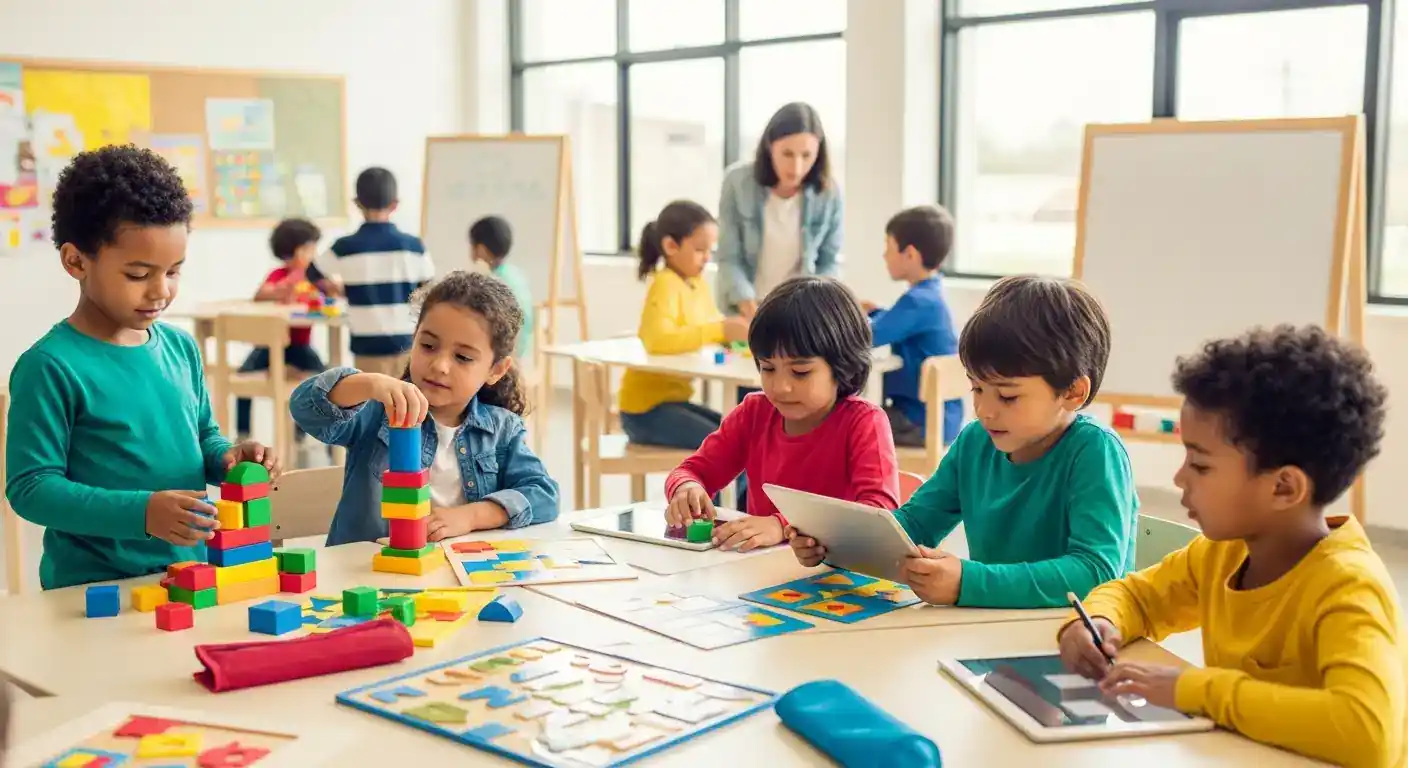
Critical pedagogy is a transformative educational philosophy that challenges traditional teaching methods and aims to empower learners. At its core, it seeks to foster critical consciousness, enabling students to question, analyze, and ultimately change the world around them. This approach moves beyond simply imparting knowledge to actively engaging students in understanding and addressing social injustices. By centering the experiences and voices of students, critical pedagogy cultivates a more equitable and relevant educational experience.
Key Points:
- Empowerment: Fosters agency and self-determination in learners.
- Critical Consciousness: Encourages questioning of societal norms and power structures.
- Social Justice: Aims to address and dismantle oppression and inequality.
- Dialogue: Prioritizes student-teacher and student-student interaction.
- Transformation: Seeks to inspire positive social change through education.
What is Critical Pedagogy?
Critical pedagogy, pioneered by thinkers like Paulo Freire, is an educational framework that views teaching and learning not as a neutral act, but as a political and social one. It posits that education has the power to either maintain existing social hierarchies or to challenge them, promoting liberation and emancipation. This philosophy is fundamentally about empowering student voices by recognizing that students bring their own unique lived experiences, cultural backgrounds, and perspectives into the classroom.
Instead of a teacher dispensing information to passive recipients (often termed the "banking concept of education" by Freire), critical pedagogy promotes a dialogical approach. This means that learning is a collaborative process, where teachers and students engage in genuine dialogue, co-constructing knowledge. The teacher becomes a facilitator and co-learner, rather than an authoritarian figure. This shift is crucial for understanding critical pedagogy as it redefines the teacher-student relationship from one of hierarchy to one of partnership.
The ultimate goal is to develop students' critical thinking skills, enabling them to analyze the social, political, and economic forces that shape their lives. This analytical capacity is what critical pedagogy refers to as critical consciousness – the ability to perceive social, political, and economic oppression and to take action against it.
Core Principles of Critical Pedagogy
Several fundamental principles underpin the practice of critical pedagogy, guiding educators in creating more empowering learning environments:
- Anti-Oppression: This is perhaps the most central tenet. Critical pedagogy actively seeks to identify and challenge all forms of oppression, including those based on race, class, gender, sexuality, religion, and ability. Educators are encouraged to be aware of their own biases and the systemic inequities present in society.
- Conscientization (Conscientização): Freire's concept of conscientization refers to the process of developing critical awareness of one's social reality through reflection and action. It's about moving from a naive understanding of the world to a critical one, recognizing how power operates and how one can effect change.
- Dialogue and Collaboration: Critical pedagogy champions dialogue as the primary mode of learning. This involves open, respectful conversations where diverse perspectives are valued, and where students and teachers engage in a process of mutual inquiry. Collaboration is key, as it mirrors the democratic ideals it seeks to foster.
- Empowerment and Agency: A key outcome of critical pedagogy is the empowerment of students. This means providing them with the tools, knowledge, and confidence to assert their own voices, make informed decisions, and take action in their communities. It’s about fostering a sense of agency.
- Problem-Posing Education: Rather than traditional problem-solving where the teacher presents a problem and a solution, problem-posing education involves presenting real-world issues that students can analyze, discuss, and collectively seek solutions for. This approach makes learning relevant and action-oriented.
How Critical Pedagogy Empowers Student Voices
The emphasis on empowering student voices is what truly distinguishes critical pedagogy. Traditional educational models often marginalize or silence students, especially those from non-dominant backgrounds. Critical pedagogy, however, makes their voices central to the learning process.
Here's how it achieves this:
- Validating Lived Experiences: Students are encouraged to bring their personal histories, cultural understandings, and everyday experiences into the classroom. These are not seen as irrelevant anecdotes but as valuable sources of knowledge and critical inquiry. By validating these experiences, educators signal that students' perspectives matter.
- Promoting Critical Dialogue: Through structured discussions and debates, students are given platforms to articulate their thoughts, challenge assumptions, and engage with differing viewpoints. This process hones their communication skills and builds their confidence in expressing themselves.
- Decentering the Teacher's Authority: While the teacher remains a guide, their authority is not absolute. This creates space for students to question, critique, and contribute to the direction of learning. This can be challenging but is essential for genuine empowerment.
- Connecting Learning to Real-World Issues: When learning is tied to issues that directly affect students' lives and communities, they are more motivated to speak up and offer their insights. This relevance makes their contributions more meaningful and impactful.
- Developing Critical Literacy: Students learn to critically analyze texts, media, and societal narratives, understanding how language and power intersect. This equips them to dissect dominant discourses and construct their own arguments with greater clarity and force.
Key Figures in Critical Pedagogy
While Paulo Freire is undoubtedly the most influential figure, several other educators and theorists have contributed significantly to the development and application of critical pedagogy.
- Paulo Freire (1921-1997): A Brazilian educator and philosopher, Freire is considered the father of critical pedagogy. His seminal work, Pedagogy of the Oppressed, outlines his philosophy of education as a practice of freedom, where teachers and students engage in dialogue to transform oppressive realities. His concepts of the "banking concept of education" and "conscientization" are foundational.
- Henry Giroux (born 1943): An American critical pedagogue, Giroux has expanded on Freire's work, focusing on the role of schooling in shaping students' identities and their understanding of democracy. He emphasizes the importance of teachers as public intellectuals and the need to resist instrumentalist approaches to education.
- Peter McLaren (born 1948): A Canadian critical pedagogue, McLaren is known for his work on revolutionary critical pedagogy, which draws heavily on Marxism and post-structuralism. He emphasizes the importance of addressing issues of class, race, and power in educational settings and advocates for active resistance against capitalist exploitation.
- ** bell hooks (1952-2021):** This influential African American author and feminist, whose name she chose to write in lowercase, applied critical pedagogy to feminist and anti-racist education. She stressed the importance of a beloved community in the classroom and the need for education to be a practice of freedom that challenges domination.
These thinkers, among others, have provided a robust theoretical foundation and practical examples for implementing critical pedagogy in diverse educational contexts. Their insights are crucial for anyone seeking to understand the deeper implications of critical pedagogy in education.
Implementing Critical Pedagogy in the Classroom
Adopting a critical pedagogy approach requires a thoughtful and intentional shift in teaching practices. It's not about abandoning curriculum but about re-envisioning how it's delivered and experienced.
Strategies for Educators
- Facilitate Open Dialogue: Create a safe and inclusive classroom environment where students feel comfortable sharing their thoughts and challenging ideas. Use Socratic questioning, think-pair-share activities, and structured debates.
- Connect Curriculum to Students' Lives: Explicitly link academic content to students' local contexts, cultural backgrounds, and current events. Ask students to explore how theoretical concepts manifest in their own communities.
- Use Diverse and Relevant Materials: Incorporate texts, media, and other resources that reflect a wide range of perspectives, including those from marginalized communities. Critically analyze these materials with students, examining who produced them and for what purpose.
- Encourage Student-Led Projects: Allow students to choose topics for research and projects that align with their interests and concerns. This fosters ownership and deeper engagement.
- Reflect on Power Dynamics: Be mindful of your own positionality and the power dynamics within the classroom. Encourage students to critically examine these dynamics and their impact on learning.
- Embrace "Unhomework": Instead of traditional homework, assign tasks that encourage critical observation, community engagement, or creative expression related to course themes. This could involve interviewing community members, analyzing local media, or creating art that addresses social issues.
Differentiated Value: Beyond Theory
While the theoretical underpinnings of critical pedagogy are well-established, its practical application in today's diverse educational landscape presents unique opportunities and challenges. One area of differentiated value lies in its adaptability to digital learning environments.
- Online Critical Pedagogy: In the digital age, critical pedagogy can be powerfully applied through online platforms. Educators can use social media, blogs, wikis, and collaborative document tools to foster dialogue and critical inquiry. Students can analyze online narratives, identify misinformation, and participate in global discussions, empowering student voices in new ways. The challenge and opportunity lie in ensuring equitable access and critically examining the algorithms and power structures embedded in digital technologies.
- Intersectional Critical Pedagogy: Building on Freire's foundational work, contemporary critical pedagogy increasingly embraces an intersectional lens. This acknowledges that oppressions are not siloed but interconnected, with individuals experiencing multiple forms of marginalization simultaneously. For instance, a student might face challenges related to their race, gender, and socioeconomic status. An intersectional approach ensures that educational practices address the complex interplay of these identities and experiences. This offers a more nuanced and comprehensive understanding than earlier approaches that might have focused on single axes of oppression.
According to research published in the Journal of Critical Pedagogy Studies (2024), studies demonstrate that when students from diverse backgrounds are given explicit opportunities to share their experiences and critically analyze societal issues, they report higher levels of engagement and a stronger sense of belonging. Furthermore, a 2023 report from the Global Education Forum highlighted the increasing demand for educational approaches that foster civic responsibility and critical thinking, directly aligning with the goals of critical pedagogy.
Challenges and Considerations
Implementing critical pedagogy is not without its challenges.
- Resistance from Traditional Structures: Educational institutions often operate within hierarchical systems that can be resistant to radical pedagogical shifts.
- Teacher Training and Support: Educators require robust training and ongoing support to effectively implement critical pedagogy, which demands a different mindset and set of skills than traditional teaching.
- Navigating Sensitive Topics: Discussing issues of power, privilege, and oppression can be sensitive and may require careful facilitation to ensure respectful dialogue.
- Assessment: Developing assessment methods that accurately reflect the deep learning and critical consciousness fostered by this approach can be complex.
Despite these challenges, the benefits of empowering student voices and fostering critical thinking make the effort worthwhile.
Frequently Asked Questions (FAQ)
Q1: What is the main goal of critical pedagogy? The primary goal of critical pedagogy is to empower students by fostering critical consciousness. It aims to equip learners to analyze social injustices, challenge oppressive systems, and become agents of positive social change, moving beyond mere knowledge acquisition.
Q2: How does critical pedagogy differ from traditional teaching methods? Traditional teaching often relies on a teacher-centered, information-transmission model (the "banking concept"). Critical pedagogy, conversely, is student-centered, emphasizing dialogue, co-construction of knowledge, and the validation of students' lived experiences.
Q3: Is critical pedagogy only for higher education? No, critical pedagogy can and should be applied at all educational levels, from early childhood to adult learning. Adapting its principles to age-appropriateness allows even young children to begin developing critical thinking and questioning skills.
Q4: How can a teacher implement critical pedagogy without prior training? While formal training is ideal, teachers can begin by fostering open dialogue, connecting curriculum to students' lives, using diverse materials, and encouraging student questioning. Reflecting on classroom power dynamics is also a crucial first step.
Conclusion: Cultivating Active, Engaged Citizens
Understanding critical pedagogy is more than just an academic exercise; it's a call to action for educators. By prioritizing the empowerment of student voices, we move towards an educational system that is not only informative but also emancipatory. Critical pedagogy equips students with the essential skills to navigate a complex world, to challenge injustice, and to contribute meaningfully to a more equitable society.
This approach fosters a lifelong love of learning and a commitment to civic engagement. It transforms the classroom from a space of passive reception to a dynamic arena of critical inquiry and collective action.
For those interested in furthering their understanding of transformative educational practices, exploring articles on constructivist learning theories and culturally responsive teaching would be beneficial. These areas share common ground with critical pedagogy in their focus on student-centered learning and the integration of diverse perspectives.
What are your thoughts on empowering student voices in education? Share your experiences and insights in the comments below! Don't forget to subscribe for more articles on educational philosophy and practice. ```