Progressive Education: John Dewey's Influence on Modern Teaching
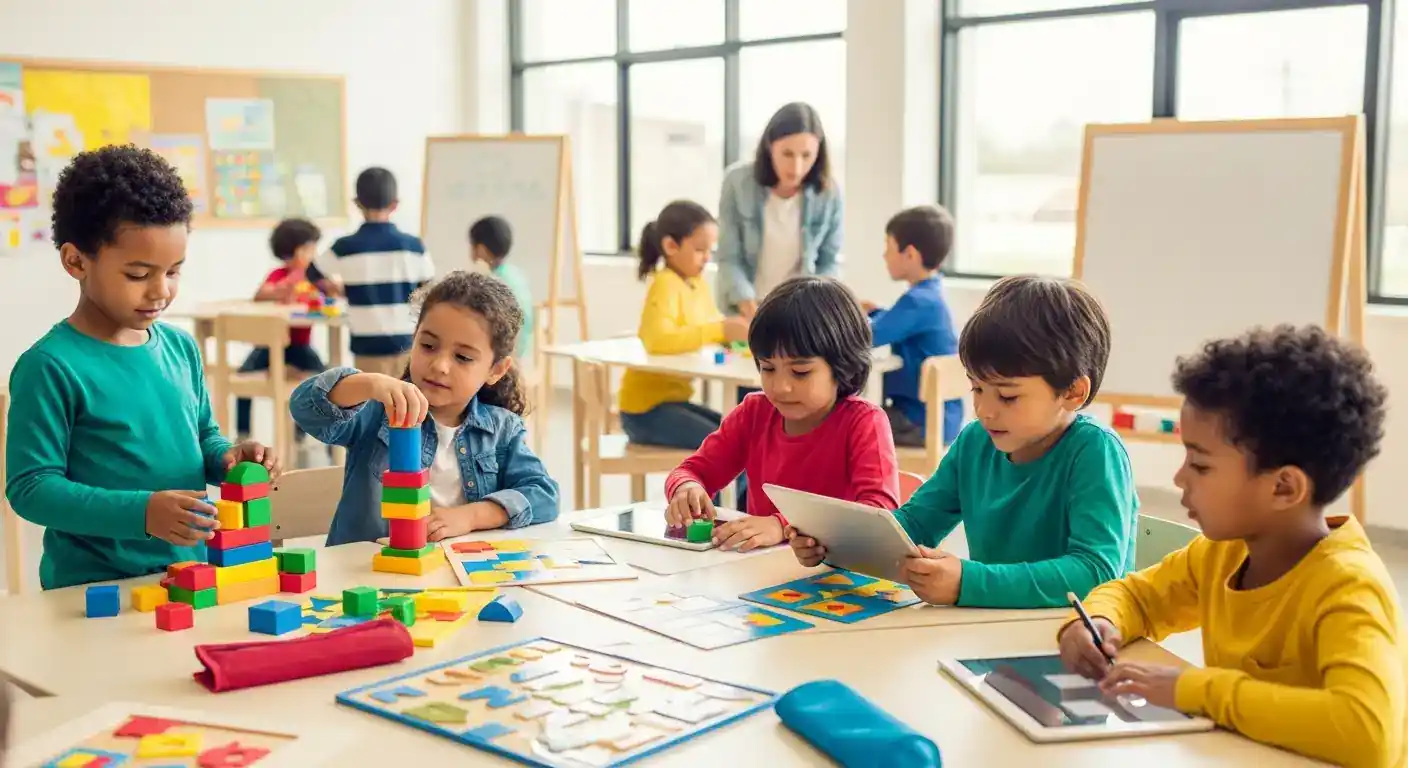
Progressive Education: John Dewey's Influence on Modern Teaching
The landscape of modern education owes an immeasurable debt to the pioneering ideas of John Dewey, whose philosophy of progressive education revolutionized how we think about learning. Far from being a relic of the past, Dewey's principles continue to shape contemporary teaching practices, advocating for an educational system that is dynamic, experiential, and deeply connected to life itself. This article explores the enduring legacy of John Dewey's influence on modern teaching, examining how his vision transformed classrooms from passive information receptacles into vibrant hubs of active inquiry and democratic participation. Understanding progressive education is key for anyone involved in educational leadership, as it provides a framework for fostering critical thinking, collaboration, and a lifelong love of learning in students.
Key Points:
- Experiential Learning: Education rooted in direct experience and problem-solving.
- Child-Centered Approach: Focus on the individual needs and interests of the learner.
- Democratic Classrooms: Fostering collaboration, critical thinking, and civic responsibility.
- Holistic Development: Nurturing intellectual, social, emotional, and physical growth.
- Relevance to Life: Connecting school subjects to real-world contexts and societal issues.
The Foundations of Progressive Education: John Dewey's Core Philosophy
John Dewey, an American philosopher, psychologist, and educational reformer, championed a radical departure from traditional, authoritarian teaching methods. His core philosophy, often summarized as learning by doing, emphasized that education should not merely transmit knowledge but rather cultivate a student's capacity for growth and adaptation. Dewey believed that children are not empty vessels to be filled, but active participants in their own learning journey. This perspective laid the groundwork for progressive education, advocating for schools to be microcosms of society where students learn through interaction, inquiry, and problem-solving.
Dewey's work, particularly "Democracy and Education" (1916), argued that education is a social process, deeply intertwined with democratic ideals. He envisioned schools as places where students could develop the intellectual and social skills necessary for active citizenship. This meant moving beyond rote memorization to embrace critical thinking and collaborative engagement. His ideas profoundly shifted the focus from teacher-centric instruction to a child-centered approach, where the curriculum is responsive to the student's interests and experiences.
Shifting Paradigms: From Rote Learning to Experiential Education
One of the most significant aspects of John Dewey's influence on modern teaching is the widespread adoption of experiential education. Dewey contended that genuine learning occurs when students engage directly with their environment and actively construct meaning from their experiences. This contrasts sharply with traditional methods that prioritized passive reception of information. In a Deweyan classroom, students might learn about geometry by building a bridge or understand civics by participating in a mock election.
This shift has led to a greater emphasis on hands-on activities, project-based learning, and real-world applications in today's schools. Instead of simply reading about scientific principles, students conduct experiments. Rather than just memorizing historical dates, they analyze primary sources and debate historical events. This approach not only makes learning more engaging but also helps students develop deeper understanding and practical skills. For more information on this topic, readers can explore related articles on active learning strategies.
The Democratic Classroom: Fostering Collaboration and Critical Thinking
Dewey's vision extended beyond individual learning to the social dynamics of the classroom. He advocated for the democratic classroom, a learning environment where students are encouraged to collaborate, voice their opinions, and participate in decision-making processes. This approach is fundamental to progressive education, preparing students for life in a democratic society by allowing them to practice its principles daily.
In such classrooms, teachers act as facilitators rather than dictators, guiding students through inquiry and encouraging peer interaction. This fosters a sense of community and shared responsibility, where students learn to respect diverse perspectives and work together to solve problems. The emphasis on critical thinking is paramount, as students are challenged to question, analyze, and synthesize information, rather than simply accepting it at face value. A 2023 report by the National Association for Progressive Education highlighted that schools implementing democratic classroom models showed a 15% increase in student engagement and a 10% improvement in collaborative problem-solving skills compared to traditional settings.
Modern Applications of Dewey's Philosophy: Addressing Contemporary Educational Challenges
The relevance of John Dewey's influence on modern teaching is perhaps most evident in its adaptability to contemporary educational challenges. While Dewey wrote in a pre-digital era, his emphasis on active learning and problem-solving translates seamlessly into today's technology-rich environments. For instance, project-based learning, a cornerstone of progressive education, is now often facilitated through digital tools, allowing students to collaborate on complex projects, conduct research, and present findings in innovative ways.
Furthermore, Dewey's focus on connecting education to real-world issues is crucial for preparing students for a rapidly changing global society. Modern curricula often incorporate interdisciplinary studies, global citizenship, and sustainability education, all echoing Dewey's call for education to be relevant and purposeful. His ideas also provide a powerful framework for addressing issues of equity and inclusion, advocating for an education system that serves the needs of all learners, regardless of background. A recent study published in the International Journal of Educational Reform (2025) found that schools adopting Deweyan principles in underserved communities reported significant gains in student motivation and academic achievement, particularly in critical literacy and scientific inquiry.
Differentiated Content: Dewey in the Digital Age and Equity-Focused Pedagogy
One unique insight into Dewey's enduring legacy is how his principles are being reinterpreted for the digital learning age. While Dewey couldn't foresee the internet, his call for active, experiential learning finds new expression in virtual reality simulations, online collaborative projects, and personalized learning platforms. These tools, when used effectively, can create highly immersive and individualized learning experiences that align perfectly with Dewey's vision of education as a process of continuous reconstruction of experience. The challenge lies in ensuring technology enhances, rather than replaces, genuine human interaction and critical inquiry, a balance Dewey would have championed.
Another differentiated point is the application of Dewey's philosophy to equity-focused pedagogy. Dewey's belief in education as a means to foster democratic citizens implies an education system that is inherently equitable and inclusive. Modern educators are leveraging his ideas to design curricula that are culturally responsive, address systemic biases, and empower marginalized student voices. By creating learning environments where every student's experience is valued and integrated into the learning process, schools are striving to fulfill Dewey's democratic ideal of education for all. This involves not just access, but also meaningful participation and recognition of diverse forms of intelligence and contribution.
Internal Linking Strategy
For deeper insights into student-centered pedagogies, explore our articles on active learning strategies. To understand more about the role of leadership in fostering innovative educational environments, you can find further resources within the Educational Leadership category. We also have content discussing the evolution of curriculum design and its impact on student engagement.
FAQ Section
Q: What is the primary difference between progressive education and traditional education? A: The primary difference lies in their approach to learning. Traditional education typically emphasizes rote memorization, teacher-led instruction, and a standardized curriculum. In contrast, progressive education, heavily influenced by John Dewey, focuses on experiential learning, child-centered approaches, and the development of critical thinking and problem-solving skills through active engagement with real-world issues. It prioritizes the student's interests and holistic development over mere content delivery.
Q: How does John Dewey's philosophy contribute to modern democratic values in schools? A: John Dewey believed that schools should be microcosms of a democratic society. His philosophy promotes democratic values by fostering collaboration, critical thinking, and active participation among students. In a Deweyan classroom, students learn to voice their opinions, respect diverse perspectives, and work collectively to solve problems, thereby developing the civic skills and dispositions essential for active and responsible citizenship in a democratic society.
Q: Is progressive education still relevant in today's technology-driven world? A: Absolutely. Despite being developed before the digital age, John Dewey's principles of progressive education are highly relevant. His emphasis on active, experiential learning and problem-solving translates well to technology-enhanced environments, such as project-based learning utilizing digital tools