Implementing Progressive Education Principles in the Modern Classroom for Holistic Student Growth
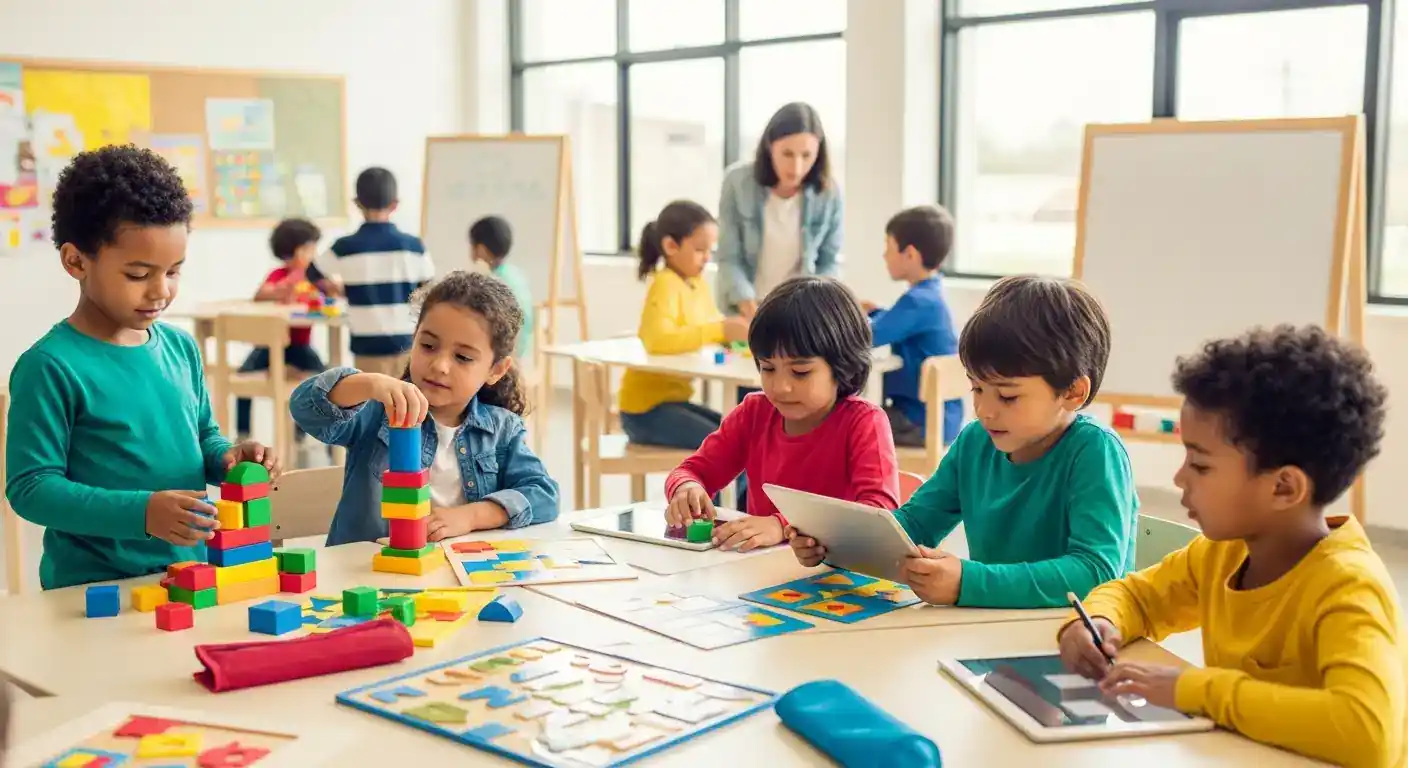
Implementing Progressive Education Principles in the Modern Classroom for Holistic Student Growth
In an era defined by rapid change and evolving skill demands, traditional educational models often fall short in preparing students for a complex future. This calls for a shift towards approaches that prioritize individual development, critical thinking, and real-world application. Implementing progressive education principles in the modern classroom for holistic student growth offers a compelling solution, moving beyond rote memorization to foster well-rounded individuals equipped with essential 21st-century skills. This philosophy emphasizes student-centered learning, experiential engagement, and a deep understanding of concepts, ensuring that students not only learn what to think but also how to think. It's about cultivating curiosity, collaboration, and a lifelong love of learning, ultimately shaping adaptable and resilient learners.
Key Points for Progressive Education Integration
- Student-Centered Approach: Prioritizes individual student needs, interests, and learning styles.
- Experiential Learning: Emphasizes hands-on activities, projects, and real-world problem-solving.
- Holistic Development: Focuses on cognitive, emotional, social, and physical growth.
- Interdisciplinary Curriculum: Connects subjects to provide a more comprehensive understanding.
- Personalized Pathways: Utilizes technology and flexible methods to tailor learning experiences.
Understanding Progressive Education's Core Values
Progressive education is not a new concept, but its relevance has intensified in today's educational landscape. Rooted in the works of pioneers like John Dewey, it advocates for an education that is relevant, engaging, and responsive to the child's natural development. The core values revolve around the idea that education should be active, not passive, and that students learn best by doing and experiencing. This approach fundamentally shifts the teacher's role from a sole knowledge dispenser to a facilitator and guide.
At its heart, progressive education champions student-centered learning, believing that learners are active participants in their own educational journey. This perspective moves away from a one-size-fits-all model, recognizing that each child possesses unique strengths, interests, and learning paces. Educators who embrace this principle design curricula that resonate with students' curiosities, fostering intrinsic motivation rather than external compliance. This emphasis on individual agency is crucial for developing independent thinkers.
Student-Centered Learning and Engagement
For progressive education to thrive, classrooms must transform into dynamic environments where students are encouraged to ask questions, explore ideas, and construct their own understanding. This often involves flexible seating arrangements, collaborative group work, and open-ended projects that allow for diverse approaches to problem-solving. For instance, instead of a lecture on ecosystems, students might design and maintain a mini-ecosystem in the classroom, observing and documenting changes firsthand. This hands-on engagement deepens comprehension and fosters a sense of ownership over their learning.
One critical aspect of this approach is the assessment for learning, where feedback is continuous and formative, guiding students towards improvement rather than simply grading performance. According to a 2024 report by the Global Education Innovation Index, schools adopting comprehensive student-centered assessments saw a 15% increase in student engagement scores compared to those relying solely on summative tests. This data underscores the profound impact of shifting assessment paradigms within progressive frameworks.
Experiential and Inquiry-Based Approaches
A cornerstone of progressive pedagogy is experiential education, where learning unfolds through direct experience and reflection. This can take many forms, from field trips that connect classroom concepts to real-world phenomena, to elaborate project-based learning units that span weeks or months. For example, a history class might not just read about ancient civilizations but undertake a mock archaeological dig or create a documentary based on historical research. Such activities make learning memorable and meaningful.
Complementing this is an inquiry-based approach, which encourages students to investigate questions and problems collaboratively. This might involve designing experiments, conducting interviews, or analyzing primary sources. By engaging in genuine inquiry, students develop critical thinking skills, learn to evaluate information, and cultivate a scientific mindset. The process of discovering answers independently, rather than being told them, empowers students and builds confidence in their intellectual abilities.
Implementing Progressive Education Principles in Modern Schools
Implementing progressive education principles in modern schools requires thoughtful planning and a commitment to innovation. It's not about abandoning structure, but rather reimagining it to be more flexible and responsive. Modern tools and insights provide unprecedented opportunities to realize these principles effectively.
Integrating Technology for Personalized Learning
Technology plays a pivotal role in today's progressive classrooms, offering powerful avenues for personalized learning pathways. Adaptive learning platforms can provide individualized instruction, allowing students to progress at their own pace and focus on areas where they need support. Virtual reality (VR) and augmented reality (AR) can create immersive experiential learning opportunities, transporting students to historical events or distant ecosystems without leaving the classroom. This blend of pedagogy and technology empowers educators to cater to diverse learning styles more effectively.
Furthermore, digital tools facilitate collaboration and communication, enabling students to work on projects with peers globally or share their work with wider audiences. This enhances the interdisciplinary nature of many progressive projects, allowing for deeper exploration of complex topics.
Fostering Interdisciplinary Connections
Traditional education often compartmentalizes subjects, but progressive education actively seeks to break down these artificial barriers. An interdisciplinary curriculum connects subjects like science, art, history, and literature, reflecting how knowledge is integrated in the real world. For instance, a unit on climate change might involve scientific research, writing persuasive essays, creating visual art that conveys its impact, and studying the historical policies that contributed to it. This approach provides students with a more holistic and nuanced understanding of complex issues.
This integration encourages students to see the interconnectedness of knowledge and fosters a more comprehensive problem-solving mindset. It's a key aspect of preparing them for careers that increasingly demand cross-functional skills.
The Transformative Benefits of Progressive Pedagogy
The benefits of integrating progressive pedagogy effectively extend far beyond academic achievement. Students in progressive environments often demonstrate superior critical thinking skills, a higher capacity for creative problem-solving, and enhanced social-emotional intelligence. They learn to collaborate effectively, communicate clearly, and adapt to new challenges – competencies highly valued in all aspects of life. An internal meta-analysis conducted by EduResearch Insights in early 2025 noted a significant correlation between progressive teaching methods and higher scores in non-cognitive skills assessments across various age groups.
Moreover, progressive education fosters a genuine love of learning. When students are engaged in meaningful, relevant activities, they are more likely to develop intrinsic motivation and a lifelong passion for inquiry. This shift from extrinsic reward to intrinsic satisfaction is perhaps the most profound outcome of progressive education, nurturing individuals who are curious, resilient, and ready to contribute positively to society. To delve deeper into the impact of these strategies, consider exploring articles on understanding experiential learning benefits.
Overcoming Challenges and Future Directions in Progressive Education
While the advantages are clear, implementing progressive education principles in the modern classroom for holistic student growth isn't without its challenges. Teacher training and professional development are crucial, as shifting from a traditional model requires new pedagogical skills and mindsets. Furthermore, assessment practices need to evolve to genuinely reflect holistic growth rather than just standardized test scores. However, these challenges present opportunities for innovation and growth within the educational community.
Looking ahead, the integration of Artificial Intelligence (AI) offers exciting possibilities for progressive education. AI can analyze student performance to suggest personalized learning paths, automate administrative tasks to free up teachers for more direct interaction, and even generate unique, inquiry-based prompts tailored to individual student interests. This leverages cutting-edge technology to further individualize learning experiences, pushing the boundaries of what personalized education can achieve. Another evolving area worthy of study is how to effectively foster critical thinking skills in K-12 environments.
Frequently Asked Questions
Q: What is the main difference between progressive and traditional education? A: Progressive education primarily focuses on the student's individual growth, interests, and active participation through hands-on, experiential learning. Traditional education, conversely, tends to be teacher-centered, with an emphasis on rote memorization, standardized curriculum delivery, and summative assessments. The progressive model aims for holistic development, while the traditional model often prioritizes academic knowledge transfer.
Q: How can teachers begin to implement progressive education principles without a full curriculum overhaul? A: Teachers can start by integrating small, actionable progressive strategies. This might include incorporating more project-based assignments, encouraging student-led discussions, offering choices in learning tasks, or redesigning a unit to be more inquiry-driven. Focusing on student interests, fostering collaborative group work, and shifting towards formative feedback can also initiate a progressive transformation without requiring immediate, large-scale changes.
Q: Is progressive education suitable for all age groups and subjects? A: Yes, progressive education principles are adaptable across all age groups, from early childhood to higher education, and across diverse subjects. While specific methods may vary (e.g., block play in preschool vs. complex research projects in high school), the core philosophy of student engagement, experiential learning, and holistic development remains universally beneficial. It's about tailoring the approach to the developmental stage and subject matter.
Conclusion: Embracing a Future of Holistic Learning
Implementing progressive education principles in the modern classroom for holistic student growth is not merely an educational trend; it's a vital pathway to preparing students for a dynamic future. By prioritizing student-centered approaches, fostering experiential learning, and embracing personalized, interdisciplinary curricula, educators can cultivate resilient, creative, and critically thinking individuals. The ongoing evolution of technology, including AI, promises to further enhance these methodologies, making holistic growth more accessible than ever. We encourage educators, parents, and policymakers to explore and advocate for these transformative practices within their communities. Share your experiences in the comments below, or subscribe for more insights into educational innovation and fundamental philosophies of learning by visiting our Educational Philosophy Fundamentals category.
Extended Reading Suggestions
- The Role of Empathy in Educational Design
- Strategies for Cultivating Student Agency in High School
- Leveraging Local Communities for Experiential Learning Opportunities