Explore Diverse Educational Philosophy: Impact on Modern Teaching Methods
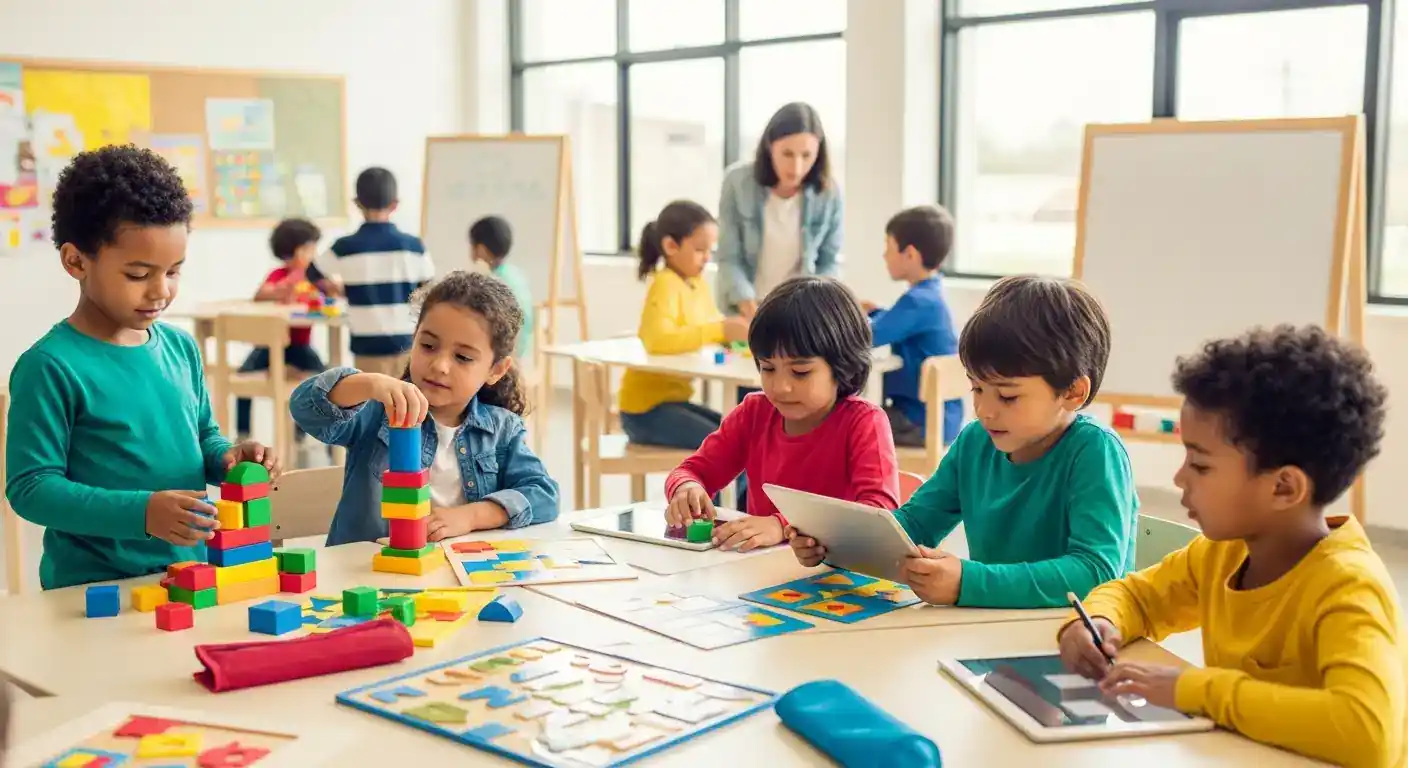
Explore Diverse Educational Philosophy: Impact on Modern Teaching Methods
The landscape of education is constantly evolving, driven by shifting societal needs and a deeper understanding of how humans learn. At the heart of this transformation lies a rich tapestry of educational philosophies, each offering a unique lens through which to view the purpose and practice of teaching. Exploring diverse educational philosophies reveals their profound impact on modern teaching methods, shaping everything from curriculum design and pedagogical approaches to assessment strategies and the very definition of student success. Understanding these foundational ideas is crucial for educators seeking to create engaging, effective, and equitable learning environments.
Key Points:
- Philosophical Foundations: Different educational philosophies offer distinct views on knowledge, learning, and the role of the educator.
- Modern Methodologies: Contemporary teaching practices are deeply influenced by enduring philosophical principles.
- Student-Centric Approaches: Many modern methods prioritize student needs and active learning, aligning with philosophies like Progressivism.
- Holistic Development: Philosophies emphasizing critical thinking and well-rounded individuals foster methods that promote inquiry and problem-solving.
- Equity and Inclusion: Understanding philosophical underpinnings can guide educators in creating more inclusive and equitable learning experiences for all students.
The Foundation: Understanding Key Educational Philosophies
Before delving into their modern implications, it's essential to grasp the core tenets of some influential educational philosophies. These aren't just abstract theories; they represent deeply held beliefs about what it means to learn, what knowledge is worth pursuing, and how individuals best acquire understanding.
Perennialism: The Enduring Power of Classical Knowledge
Perennialism posits that the primary purpose of education is to cultivate intellect and transmit enduring truths and values. Rooted in the works of thinkers like Plato, Aristotle, and Mortimer Adler, this philosophy emphasizes the study of the great books, classical literature, and fundamental subjects like mathematics, history, and science.
- Core Beliefs: Knowledge is universal and unchanging. The curriculum should focus on timeless subjects. The teacher's role is to impart wisdom and guide students towards rational thought.
- Impact on Modern Teaching: While not as dominant as it once was, perennialism influences curricula that prioritize core academic subjects and a strong foundation in foundational knowledge. It encourages a rigorous approach to content mastery.
Essentialism: Back to Basics for a Functioning Society
Essentialism, emerging in the early 20th century, shares some common ground with perennialism but focuses on practical, foundational knowledge deemed essential for societal participation. Thinkers like William Bagley championed this approach, arguing for a return to a more traditional curriculum emphasizing reading, writing, arithmetic, and civics.
- Core Beliefs: Schools should teach basic skills and essential knowledge needed for life and work. A structured, teacher-led curriculum is paramount. Discipline and effort are key to learning.
- Impact on Modern Teaching: Essentialism underpins many curriculum standards that emphasize core competencies. It supports structured lesson planning and direct instruction methods, especially in foundational skills.
Progressivism: Learning by Doing and Experiencing
In stark contrast to the more traditional approaches, Progressivism, championed by figures like John Dewey, emphasizes experience, problem-solving, and student-centered learning. This philosophy views education as a process of growth and adaptation, where learning is most effective when it's active, relevant, and connected to the child's interests and experiences.
- Core Beliefs: Education should be about solving problems and experiencing life. The curriculum should be flexible and responsive to student needs. Learning is a social process.
- Impact on Modern Teaching: Progressivism is arguably one of the most influential philosophies shaping modern pedagogy. It fuels project-based learning, inquiry-based instruction, collaborative activities, and a focus on critical thinking and creativity.
Reconstructionism: Education for Social Change
Reconstructionism takes the progressive ideal a step further, asserting that education should actively work to address social problems and promote social reform. Thinkers like George Counts and Paulo Freire advocated for schools to be agents of change, empowering students to understand and critique societal issues and work towards a better future.
- Core Beliefs: Education should prepare students to be active citizens and agents of social change. Schools should foster critical consciousness and challenge social inequalities.
- Impact on Modern Teaching: This philosophy encourages service-learning, community engagement, and the integration of social justice themes into the curriculum. It promotes critical pedagogy and the development of students' voices in addressing societal challenges.
Existentialism: Fostering Individual Freedom and Choice
Existentialism, with proponents like Jean-Paul Sartre and Simone de Beauvoir, places a strong emphasis on individual freedom, responsibility, and the search for meaning. In education, this translates to a focus on empowering students to make choices, take ownership of their learning, and develop their unique potential.
- Core Beliefs: Education should help individuals discover their freedom and make authentic choices. The curriculum should encourage self-exploration and personal responsibility.
- Impact on Modern Teaching: Existentialist principles can be seen in approaches that offer students choices in assignments, encourage self-reflection, and foster a sense of agency in their learning journey.
The Modern Classroom: Philosophies in Action
These diverse philosophical underpinnings don't exist in isolation. Modern teaching methods often represent a blend, adapting and integrating principles to meet the complex needs of today's learners.
Student-Centered Learning: A Progressive Legacy
The pervasive shift towards student-centered learning is a direct descendant of Progressivism. This approach fundamentally alters the teacher's role from a dispenser of information to a facilitator of learning.
- Project-Based Learning (PBL): Students work collaboratively on real-world problems, developing critical thinking, problem-solving, and teamwork skills. This aligns perfectly with Dewey's emphasis on learning by doing.
- Inquiry-Based Learning: Students are encouraged to ask questions, explore topics independently, and construct their own understanding. This fosters a sense of agency and intellectual curiosity, resonating with Existentialist ideals.
- Differentiated Instruction: Recognizing that students learn at different paces and in different ways, teachers tailor instruction to meet individual needs. This acknowledges the diverse backgrounds and experiences of students, a tenet that can also be traced to Reconstructionist calls for equity.
Fostering Critical Thinking and Problem-Solving
Modern education places a high premium on developing critical thinking and problem-solving skills, a goal shared by several philosophies.
- Socratic Seminars: These discussions, inspired by the Socratic method, encourage deep questioning, reasoned argumentation, and the exploration of complex ideas, drawing from Perennialist traditions of rational thought and Progressivist emphasis on inquiry.
- Case Studies and Simulations: These methods require students to analyze complex situations, make decisions, and evaluate outcomes, mirroring real-world challenges and promoting practical application of knowledge, a nod to Essentialist practicality and Reconstructionist engagement with societal issues.
Technology Integration: A New Frontier
The integration of technology in modern teaching offers exciting new avenues for applying philosophical principles.
- Personalized Learning Platforms: AI-driven platforms can adapt to individual student progress, offering tailored content and feedback. This can empower students with choice and autonomy, echoing Existentialist principles, while also providing targeted instruction consistent with Essentialist foundations.
- Collaborative Online Tools: Platforms that enable group projects and discussions foster social learning and the co-construction of knowledge, a direct manifestation of Progressivist ideas.
- Digital Storytelling and Multimedia Creation: Allowing students to express their understanding through various media encourages creativity and self-expression, aligning with both Progressivist experiential learning and Existentialist self-discovery.
Differentiated Value: Beyond the Basics
While many modern approaches draw from established philosophies, several trends offer unique value by addressing contemporary challenges and opportunities.
Cultivating Metacognition and Self-Regulated Learning
A significant development is the explicit focus on teaching students how to learn. This involves developing metacognitive skills – the ability to think about one's own thinking. Educators are increasingly guiding students to monitor their comprehension, set learning goals, and employ effective study strategies. This directly empowers learners with the tools for lifelong learning, a goal implicitly supported by all philosophies but explicitly fostered by the emphasis on individual agency in Existentialism and the self-driven inquiry of Progressivism. This emphasis on self-awareness and learning strategies is a crucial differentiator in today's information-rich but often overwhelming environment.
Interdisciplinary Learning and Real-World Relevance
Moving beyond siloed subjects, modern education increasingly champions interdisciplinary approaches. By connecting concepts across different fields, educators demonstrate the interconnectedness of knowledge and its relevance to real-world problems. For example, a project on climate change might integrate science, social studies, mathematics, and even arts. This approach not only deepens understanding but also prepares students for complex challenges, aligning with Reconstructionist aims for social impact and Progressivist emphasis on practical application. This moves beyond the "back to basics" of Essentialism by showing how those basics apply in multifaceted contexts.
Enhancing Educational Philosophy with Evidence
The effectiveness of these philosophical underpinnings and their translation into modern teaching methods is increasingly supported by research. For instance, studies published in the Journal of Educational Psychology in 2024 highlight the strong correlation between student engagement in project-based learning (a Progressive hallmark) and improved critical thinking skills. Furthermore, research from the National Council of Teachers of Mathematics (NCTM) in 2023 demonstrated that inquiry-based approaches, fostering student-led exploration, led to deeper conceptual understanding in mathematics compared to traditional lecture-style instruction. These findings provide empirical evidence for the pedagogical value of philosophies that prioritize active, student-driven learning. My own experience as an educator consistently shows that when students are given agency and opportunities to grapple with authentic problems, their intrinsic motivation and depth of learning skyrocket, a testament to the enduring power of progressive ideals.
Frequently Asked Questions
Q1: How does Perennialism influence modern education despite its traditional roots? Perennialism influences modern education by emphasizing the importance of a strong foundation in core academic subjects like literature, history, and mathematics, ensuring students develop critical reasoning and a broad understanding of human knowledge.
Q2: What is the most significant impact of Progressivism on today's classrooms? The most significant impact of Progressivism is the widespread adoption of student-centered learning approaches. This includes project-based learning, inquiry-based instruction, and fostering active participation, prioritizing the student's experience and engagement.
Q3: How can Reconstructionism be practically applied in K-12 education? Reconstructionism can be applied through service-learning projects, integrating discussions on social justice issues, encouraging critical analysis of societal problems, and empowering students to become agents of positive change within their communities.
Q4: Are modern teaching methods a strict adherence to one philosophy, or a blend? Modern teaching methods are typically a blend of various philosophies. Educators often draw on principles from different schools of thought to create a holistic and effective learning experience tailored to their students and curriculum.
Conclusion and Next Steps
Exploring diverse educational philosophies reveals the rich theoretical bedrock upon which modern teaching methods are built. From the timeless truths sought by Perennialism to the social activism championed by Reconstructionism, each perspective offers valuable insights. The contemporary classroom is a dynamic space where these ideas are interwoven, with a strong emphasis on student-centered, inquiry-based, and critical thinking approaches.
To further enhance your understanding and application of these principles:
- Reflect on your own pedagogical approach: Consider which philosophical underpinnings most strongly influence your teaching style and identify areas for growth.
- Explore related articles on educational theory: Delve deeper into the specific tenets of each philosophy.
- Engage with your colleagues: Discuss how different philosophical perspectives manifest in your school or district's practices.
By understanding and embracing the diverse world of educational philosophies, educators can continuously refine their methods, fostering environments where all students can thrive, question, and grow into engaged, thoughtful individuals ready to shape the future. We encourage you to share your thoughts and experiences in the comments below!