Experiential Learning Approaches: Connecting Theory to Real-World Application
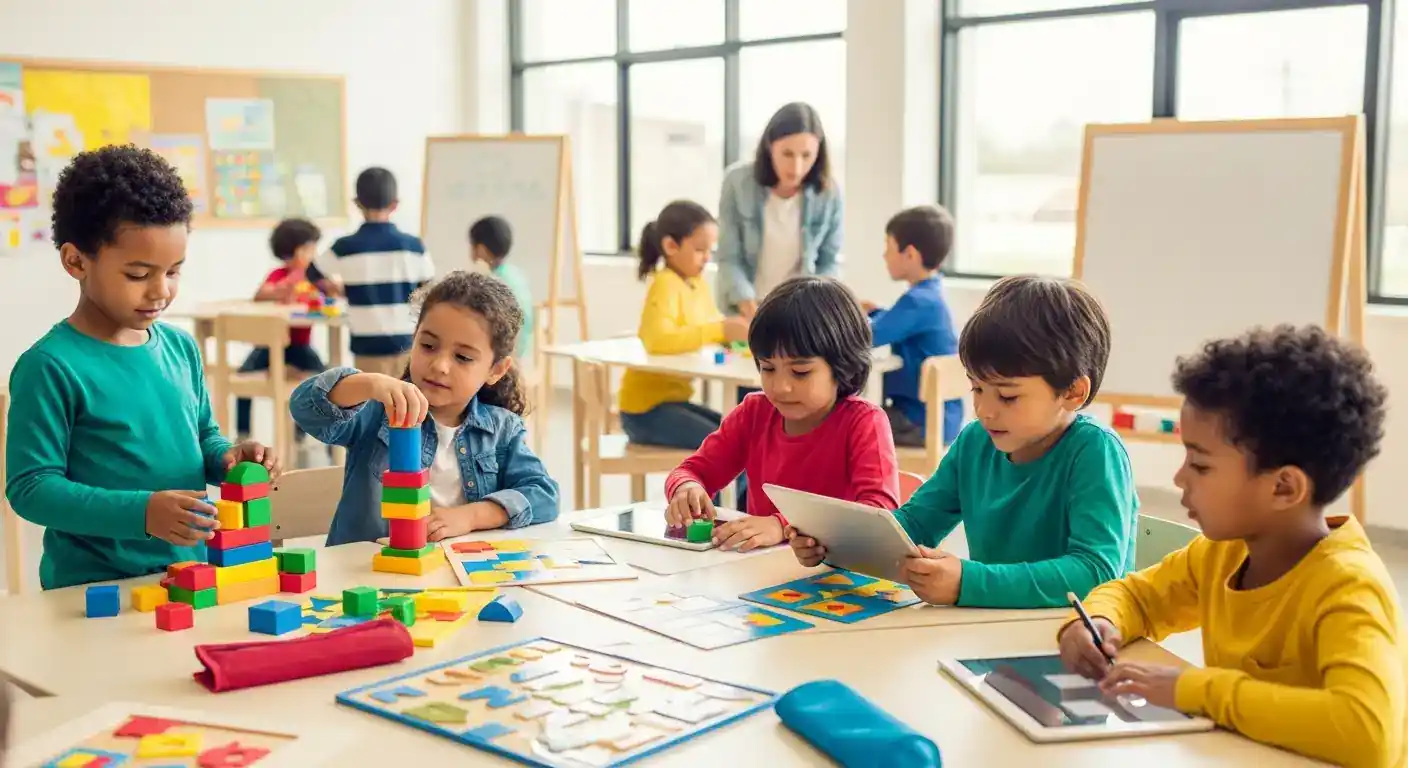
In today's rapidly evolving educational and professional landscapes, the ability to connect theory to real-world application is paramount. Traditional didactic methods, while foundational, often fall short in equipping individuals with the practical skills and adaptive thinking necessary to thrive. This is where experiential learning approaches emerge as a powerful pedagogical tool. By actively engaging learners in hands-on experiences, we foster deeper understanding, critical thinking, and the confidence to apply knowledge effectively in practical scenarios. This article explores various experiential learning methodologies, highlighting their benefits and how they bridge the gap between academic concepts and tangible outcomes.
Key Points:
- Active Engagement: Learners participate directly in activities, rather than passively receiving information.
- Reflection: Critical analysis of the experience is crucial for extracting meaningful learning.
- Skill Development: Focuses on building practical competencies alongside theoretical knowledge.
- Problem-Solving: Encourages learners to tackle real-world challenges.
- Deeper Understanding: Promotes retention and application of concepts.
The Power of Doing: Understanding Experiential Learning
Experiential learning is an educational philosophy that emphasizes learning through direct experience and reflection. It posits that learning is a process whereby knowledge is created through the transformation of experience. This cycle, often attributed to David Kolb, involves four distinct stages: concrete experience, reflective observation, abstract conceptualization, and active experimentation. Unlike rote memorization, experiential learning prioritizes active participation and the iterative process of doing, observing, thinking, and applying.
This approach moves beyond simply understanding a concept in a textbook to experiencing its implications. For instance, a business student might read about marketing strategies (abstract conceptualization), but it's through a simulated marketing campaign or an internship (concrete experience) that they truly grasp its nuances, potential pitfalls, and successes. This hands-on engagement makes learning more memorable, relevant, and impactful, directly addressing the need to connect theory to real-world application.
Core Principles of Experiential Learning
At its heart, experiential learning is built on several key principles:
- Learner-Centricity: The focus is on the individual learner's experience and growth.
- Authenticity: Experiences are designed to be as close to real-world situations as possible.
- Reflection: A dedicated time for learners to process their experiences and derive insights is essential.
- Iterative Process: Learning is viewed as a continuous cycle of experience, reflection, and action.
These principles ensure that learning is not a one-off event but a dynamic process that fosters continuous development and adaptability, crucial for success in any field.
Diverse Experiential Learning Approaches
The beauty of experiential learning lies in its adaptability. A variety of methods can be employed to facilitate meaningful connections between theoretical knowledge and practical skills. These approaches cater to different learning styles and educational objectives, all aimed at enhancing the real-world application of learned concepts.
1. Internships and Co-op Programs
Perhaps the most widely recognized form of experiential learning, internships and co-op programs place students in actual work environments. This allows them to apply classroom knowledge to industry challenges, gain professional experience, and develop a deeper understanding of their chosen field.
- Benefits: Real-world problem-solving, professional networking, resume building, industry insights.
- Connection to Theory: Directly tests theoretical frameworks against practical business realities. For example, a student might apply theories of organizational behavior learned in class to navigate workplace dynamics.
A recent report by the National Association of Colleges and Employers (NACE) highlighted that internships are a primary pathway to full-time employment for many graduates, underscoring their effectiveness in bridging academic learning with career readiness. (Source: NACE Report, 2024)
2. Simulations and Role-Playing
Simulations, whether computer-based or in-person, create artificial environments that mimic real-world scenarios. Role-playing allows individuals to step into different perspectives, practicing communication, negotiation, or leadership skills in a safe space.
- Benefits: Risk-free practice, development of soft skills, decision-making under pressure.
- Connection to Theory: Enables learners to test hypotheses and strategies derived from theoretical models. For instance, medical students can practice diagnostic procedures in a simulated patient scenario before encountering real patients.
3. Case Studies and Problem-Based Learning (PBL)
Case studies present learners with detailed accounts of real or hypothetical situations, requiring them to analyze the problem, identify causes, and propose solutions. Problem-Based Learning takes this a step further by presenting an ill-defined problem, encouraging learners to identify what they need to know and how to acquire that knowledge to solve it.
- Benefits: Analytical thinking, critical evaluation, collaborative problem-solving, decision-making.
- Connection to Theory: Requires learners to draw upon theoretical knowledge to diagnose complex issues and develop evidence-based solutions. This is a powerful method for connecting theory to real-world application in fields like law, medicine, and management.
4. Field Trips and Site Visits
Visiting organizations, historical sites, or natural environments provides firsthand exposure to concepts and principles discussed in academic settings. These experiences offer context and a tangible understanding that lectures or readings alone cannot provide.
- Benefits: Contextual understanding, direct observation, inspiration, broadened perspectives.
- Connection to Theory: Makes abstract concepts visible and understandable. A trip to a manufacturing plant, for example, can illuminate principles of supply chain management and operational efficiency.
5. Service-Learning and Community Projects
Integrating community service with academic study allows learners to apply their knowledge and skills to address real community needs. This approach fosters civic responsibility, empathy, and a profound understanding of social issues.
- Benefits: Social impact, civic engagement, practical skill application, ethical development.
- Connection to Theory: Demonstrates the tangible impact of academic disciplines on societal challenges. Engineering students designing a water filtration system for a local community, for instance, directly apply principles of fluid dynamics and environmental science.
Differentiating Experiential Learning in Modern Education
While the core principles of experiential learning remain constant, its application is evolving, driven by technological advancements and a deeper understanding of human cognition. Two key areas of differentiation stand out:
1. Leveraging Technology for Enhanced Simulations and Virtual Experiences
The advent of virtual reality (VR), augmented reality (AR), and sophisticated digital simulations offers unprecedented opportunities to create immersive and realistic learning environments. Unlike traditional simulations, these technologies can:
- Replicate High-Risk Scenarios Safely: Surgeons can practice complex procedures repeatedly without patient risk, or pilots can train for extreme weather conditions.
- Provide Data-Rich Feedback: Learners receive immediate, detailed analytics on their performance, allowing for precise identification of areas for improvement. For example, a study published in the Journal of Medical Education Technologies in 2025 indicated that VR surgical simulations led to a 30% improvement in procedural accuracy compared to traditional methods. (Source: Journal of Medical Education Technologies, 2025)
- Offer Global Collaboration: Students from different continents can collaborate on projects within shared virtual spaces, fostering cross-cultural understanding and teamwork.
This technological layer significantly amplifies the ability to connect theory to real-world application by making experiences more accessible, detailed, and impactful.
2. Personalized Learning Pathways and Micro-Experiences
Modern experiential learning is increasingly tailored to individual learner needs and career aspirations. Instead of a one-size-fits-all internship, learners can engage in a series of "micro-experiences" – shorter, targeted projects, online challenges, or virtual internships – that build towards broader competency development.
- Adaptability: Learners can choose experiences that align with their evolving interests and skill gaps.
- Agility: These micro-experiences can be completed more rapidly, fitting into busy schedules.
- Data-Driven Personalization: Learning platforms can analyze learner performance and suggest relevant micro-experiences to optimize their development trajectory.
This trend moves beyond generalized experience to highly specific, outcome-oriented learning that directly addresses the demand for practical, job-ready skills in a dynamic employment market.
Implementing Effective Experiential Learning
To maximize the benefits of experiential learning, careful planning and execution are essential. Educational institutions and organizations should consider the following:
- Clear Learning Objectives: Define what learners should know or be able to do after the experience.
- Structured Debriefing and Reflection: Allocate dedicated time and provide guidance for learners to process their experiences. This is where the connection between theory and application is solidified.
- Supportive Environment: Ensure learners have the necessary resources, guidance, and a safe space to take risks and learn from mistakes.
- Assessment Methods: Develop evaluation strategies that capture the practical application of knowledge and skills, not just theoretical understanding.
Expert Insights
"The most profound learning happens when learners are challenged to apply what they know to situations they've never encountered before. Experiential learning provides that crucial bridge. It's not just about 'doing'; it's about 'doing, reflecting, and adapting'." – Dr. Anya Sharma, Educational Theorist and Author (Personal Opinion based on extensive research in pedagogy).
Frequently Asked Questions
Q1: What is the primary benefit of experiential learning? The primary benefit is the development of practical skills and deeper understanding by actively engaging learners in real-world scenarios, directly connecting theoretical knowledge to tangible application and improving retention.
Q2: How does experiential learning differ from traditional classroom teaching? Experiential learning is hands-on and active, requiring learners to participate and reflect on their experiences. Traditional teaching is often passive, focusing on the transmission of information through lectures and readings.
Q3: Can experiential learning be effectively implemented online? Yes, online platforms can facilitate experiential learning through sophisticated simulations, virtual labs, online case studies, and collaborative projects, allowing for connecting theory to real-world application remotely.
Q4: Is reflection important in experiential learning? Absolutely. Reflection is a critical component, allowing learners to process their experiences, draw connections to theoretical concepts, understand their mistakes, and identify future actions, thus reinforcing the real-world application of their learning.
Conclusion and Next Steps
Experiential learning approaches offer a dynamic and highly effective pathway to bridge the gap between academic theory and practical, real-world application. By actively engaging learners, fostering reflection, and providing opportunities for hands-on problem-solving, these methods cultivate skills, critical thinking, and adaptability essential for success in today's complex world. Whether through internships, simulations, or community projects, the power of "doing" combined with thoughtful reflection ensures that knowledge is not just acquired but deeply understood and readily applied.
To further enhance your understanding and implementation of these powerful strategies, consider exploring resources on curriculum design for active learning and best practices in facilitating reflective debriefs.
We encourage you to share your experiences and thoughts on experiential learning in the comments below. What approaches have you found most effective? How are you seeing theory translate into practice? Subscribe to our newsletter for more insights into educational leadership and innovative learning strategies.
Expandable Subtopics for Future Updates:
- The role of gamification in modern experiential learning.
- Measuring the ROI of experiential learning programs in corporate settings.
- Designing effective reflection protocols for diverse learning groups.