Designing Effective Experiential Learning Activities to Foster Deeper Understanding and Skill Acquisition
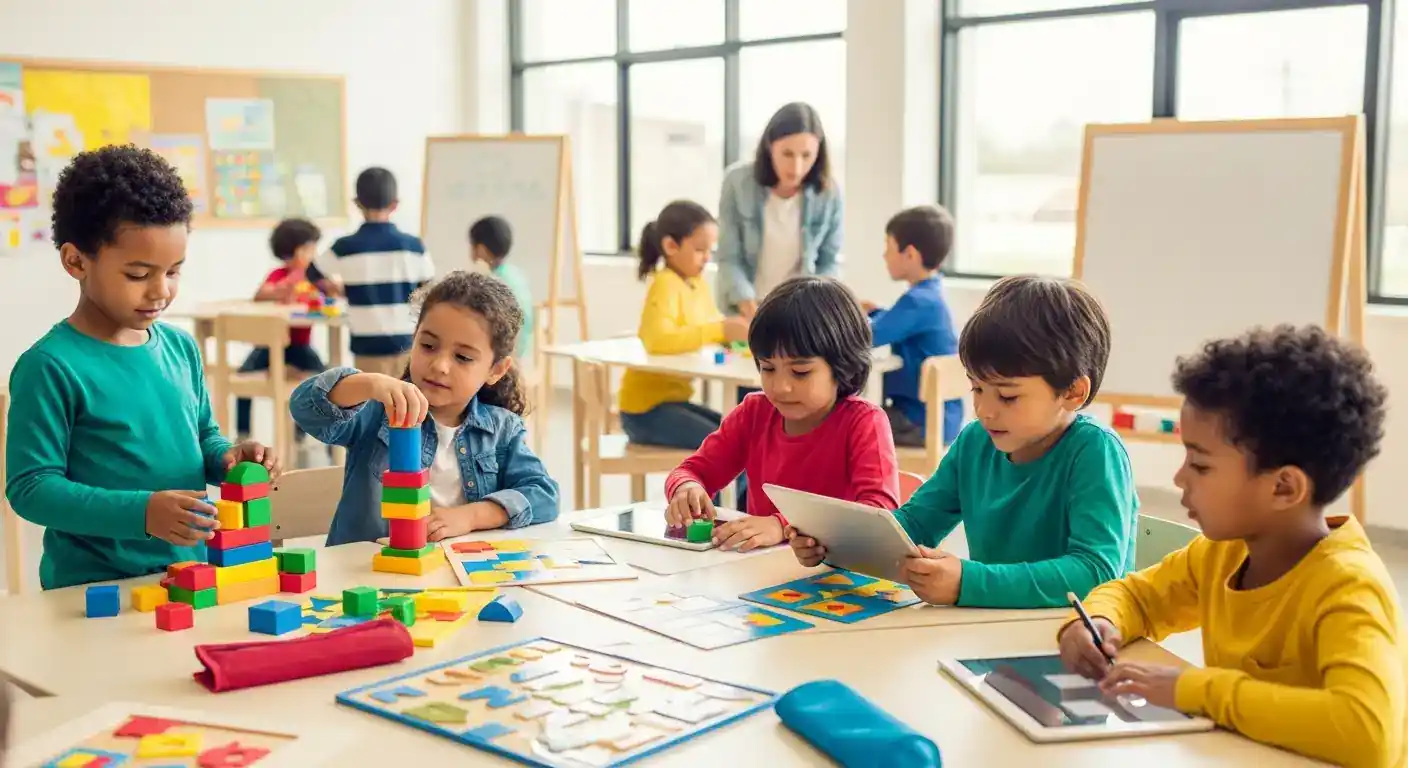
The landscape of education is continuously evolving, with a growing recognition of the limitations of passive learning. To truly equip learners with lasting knowledge and practical capabilities, educators must move beyond traditional lectures and embrace methodologies that actively engage students. This shift underscores the critical importance of designing effective experiential learning activities, which are pivotal for fostering deeper understanding and robust skill acquisition.
Experiential learning, at its core, involves learning by doing, followed by reflection. It transforms abstract concepts into tangible experiences, allowing individuals to connect theory with practice directly. This approach not only enhances comprehension but also develops crucial real-world skills, preparing students for complex challenges in their academic and professional journeys. For any educator or curriculum developer, mastering the art of creating these impactful activities is an invaluable asset.
Key Points for Designing Experiential Learning Activities
- Active Engagement: Prioritize hands-on participation over passive observation.
- Clear Learning Outcomes: Define what students should know and be able to do.
- Structured Reflection: Incorporate opportunities for critical thinking and debriefing.
- Authentic Contexts: Design activities that mirror real-world scenarios.
- Iterative Design: Be prepared to adapt and refine activities based on feedback.
Understanding the Core Principles for Designing Effective Experiential Learning Activities
Experiential learning is more than just a buzzword; it's a pedagogical approach rooted in how humans naturally learn. John Dewey, a pioneer in this field, emphasized that education must be grounded in experience. Decades later, David Kolb's Experiential Learning Cycle provided a framework, highlighting concrete experience, reflective observation, abstract conceptualization, and active experimentation as interconnected stages. When designing effective experiential learning activities, it's crucial to integrate these principles to maximize their impact on deeper understanding and skill acquisition.
The power of active learning lies in its ability to engage multiple senses and cognitive processes simultaneously. When learners are actively involved in problem-solving, decision-making, or creating, they form stronger neural connections, leading to better memory retention and transfer of knowledge. This contrasts sharply with passive learning, where information is often received without genuine processing or application. The goal is to move beyond mere recall to genuine comprehension and the ability to apply learned concepts.
Setting Clear Learning Outcomes and Objectives
Before embarking on the design process, clearly define what you want learners to achieve. What knowledge should they gain? What specific skills should they acquire or improve? For instance, an activity for future engineers might aim for "the ability to diagnose and troubleshoot common system failures," while a business student activity could target "developing persuasive presentation skills." Well-defined learning outcomes act as a compass, guiding every aspect of your activity design and ensuring alignment with educational goals.
When crafting these outcomes, use action verbs that reflect higher-order thinking, such as analyze, synthesize, evaluate, create, or apply. This specificity helps in structuring active learning experiences that directly contribute to the desired deeper understanding. Without clear objectives, even the most engaging activity can lack direction and fail to deliver meaningful educational value.
Incorporating Authentic Contexts and Real-World Relevance
One of the distinguishing features of designing effective experiential learning activities is their grounding in authentic, real-world scenarios. Students are more engaged when they perceive the relevance of what they are learning. This means moving beyond hypothetical examples to case studies, simulations, fieldwork, or community projects that mirror professional or societal challenges.
For example, instead of a theoretical discussion on ethical dilemmas in healthcare, students could participate in a simulated patient interaction requiring them to make rapid ethical decisions. This immersive approach not only builds relevant skills but also deepens their understanding of the complexities involved. A recent study in the Journal of Experiential Education (2024) highlighted that simulations significantly enhance critical thinking and decision-making skills in high-stakes fields.
Structuring Active Learning Experiences for Engagement
The core of experiential learning is doing. Activities must demand active participation rather than passive observation. This can take many forms:
- Project-Based Learning: Students work on extended projects that require problem-solving, collaboration, and application of knowledge. This promotes comprehensive skill acquisition.
- Simulations and Role-Playing: Creating realistic scenarios where learners take on specific roles to practice decision-making and interpersonal skills. This is highly effective for developing soft skills.
- Internships and Fieldwork: Direct immersion in professional environments, providing invaluable practical experience.
- Case Studies: Analyzing real-life situations and proposing solutions, often in teams.
- Service-Learning: Combining community service with academic instruction and reflection.
When structuring these activities, ensure there's a balance between challenge and support. Learners should feel pushed to think critically and solve problems, but also have access to resources and guidance. One key element in effective design is providing opportunities for student engagement strategies to keep them motivated and involved. This could involve group work, peer feedback, or opportunities for choice within the activity. For further reading on active learning techniques, consider exploring /articles/boosting-student-engagement-strategies-for-active-learning.
The Indispensable Role of Reflection and Debriefing
The "experience" part of experiential learning is only half the equation; the other half is "reflection." Without structured opportunities for reflection, an activity remains merely an event rather than a powerful learning experience. Reflection allows learners to:
- Process the experience: What happened? What did I observe?
- Analyze their actions: Why did I make those choices? What were the consequences?
- Connect to theory: How does this experience relate to the concepts we're studying?
- Plan for future action: What would I do differently next time? What have I learned?
Effective debriefing sessions, peer discussions, journaling, or reflective essays are vital tools. For example, a debrief after a team challenge should not only review the outcome but also explore team dynamics, communication effectiveness, and individual contributions. This metacognitive process is crucial for transforming raw experience into deeper understanding and cemented skill acquisition. A review published in Research on Learning and Instruction (2023) emphasized that structured reflection is a primary factor in the transferability of skills learned through project-based approaches.
Integrating Technology for Enhanced Experiential Learning
Modern technology offers exciting new avenues for designing effective experiential learning activities. Virtual Reality (VR) and Augmented Reality (AR) can create immersive simulations that were previously impossible or too costly. Imagine medical students practicing surgical procedures in a VR environment, or architecture students exploring their designs in AR.
Artificial intelligence (AI) can provide personalized feedback, generate complex scenarios, and even act as intelligent agents in simulations. For instance, AI-driven chatbots can simulate customer interactions for business students, offering immediate feedback on communication effectiveness. A report by a leading educational technology consortium (2025) highlighted the significant potential of AI and VR in creating scalable and highly personalized experiential learning opportunities, especially in remote or resource-limited settings. When thinking about /articles/mastering-curriculum-design-essential-principles-for-educators, incorporating these tools should be a key consideration.
Evaluating Experiential Learning Impact and Outcomes
Measuring the effectiveness of experiential learning is crucial for continuous improvement. Evaluation should go beyond traditional tests and incorporate assessments that reflect the nature of the activities. This might include:
- Performance-based assessments: Observing students applying skills in a real or simulated context.
- Portfolios: Collections of student work demonstrating skill development and learning over time.
- Peer and self-assessment: Encouraging critical evaluation of one's own and others' contributions.
- Rubrics: Clear criteria for evaluating specific skills, such as problem-solving, collaboration, or communication.
The goal is not just to see if students learned, but how deeply they understood and how proficiently they acquired skills. Gathering feedback from students on the activity design, relevance, and impact is also invaluable for refining future iterations.
Frequently Asked Questions (FAQ)
Q: What is the primary benefit of experiential learning?
A: The primary benefit is fostering a deeper understanding and accelerating skill acquisition by bridging the gap between theory and practice. Learners actively engage with concepts, developing critical thinking, problem-solving, and practical application skills that are often difficult to cultivate through passive methods alone.
Q: How can I ensure my experiential learning activities are inclusive for all students?
A: Ensure inclusivity by offering varied participation roles, providing clear instructions and scaffolding, and considering diverse learning styles. Offer alternative ways for students to engage and reflect, such as written reflections, verbal debriefs, or creative outputs. Accommodations for physical or cognitive differences should be planned from the outset.
Q: What are some common challenges in implementing experiential learning?
A: Common challenges include time and resource constraints for activity design and implementation, securing authentic contexts or partners, managing group dynamics, and effectively assessing complex skills. Overcoming these requires careful planning, flexibility, and strong communication with stakeholders.
Q: How do experiential learning activities contribute to career readiness?
A: Experiential learning significantly boosts career readiness by allowing students to practice and refine professional skills in realistic settings. This includes teamwork, communication, problem-solving, ethical decision-making, and adapting to real-world challenges, making graduates more competitive and confident in the job market.
Conclusion and Next Steps
Designing effective experiential learning activities is a powerful pathway to equipping learners with enduring knowledge and practical capabilities. By focusing on clear objectives, authentic contexts, active engagement, and structured reflection, educators can create transformative experiences that go far beyond rote memorization. The integration of modern technologies further amplifies these possibilities, offering immersive and personalized learning journeys.
We encourage you to experiment with these principles, start small, gather feedback, and continuously refine your approaches. Your efforts in creating dynamic and engaging learning environments are central to promoting holistic Student Development. Share your experiences, challenges, and successes in the comments below – your insights contribute to a richer learning community.
Further Reading Suggestions:
- Explore advanced techniques for student engagement by visiting
/articles/boosting-student-engagement-strategies-for-active-learning. - Deepen your understanding of educational framework principles at
/articles/mastering-curriculum-design-essential-principles-for-educators. - Discover more content related to developing well-rounded students in our dedicated
/categories/student-developmentsection.