Decoding How Constructivist Theories Shape Active Student Development and Critical Thinking Skills
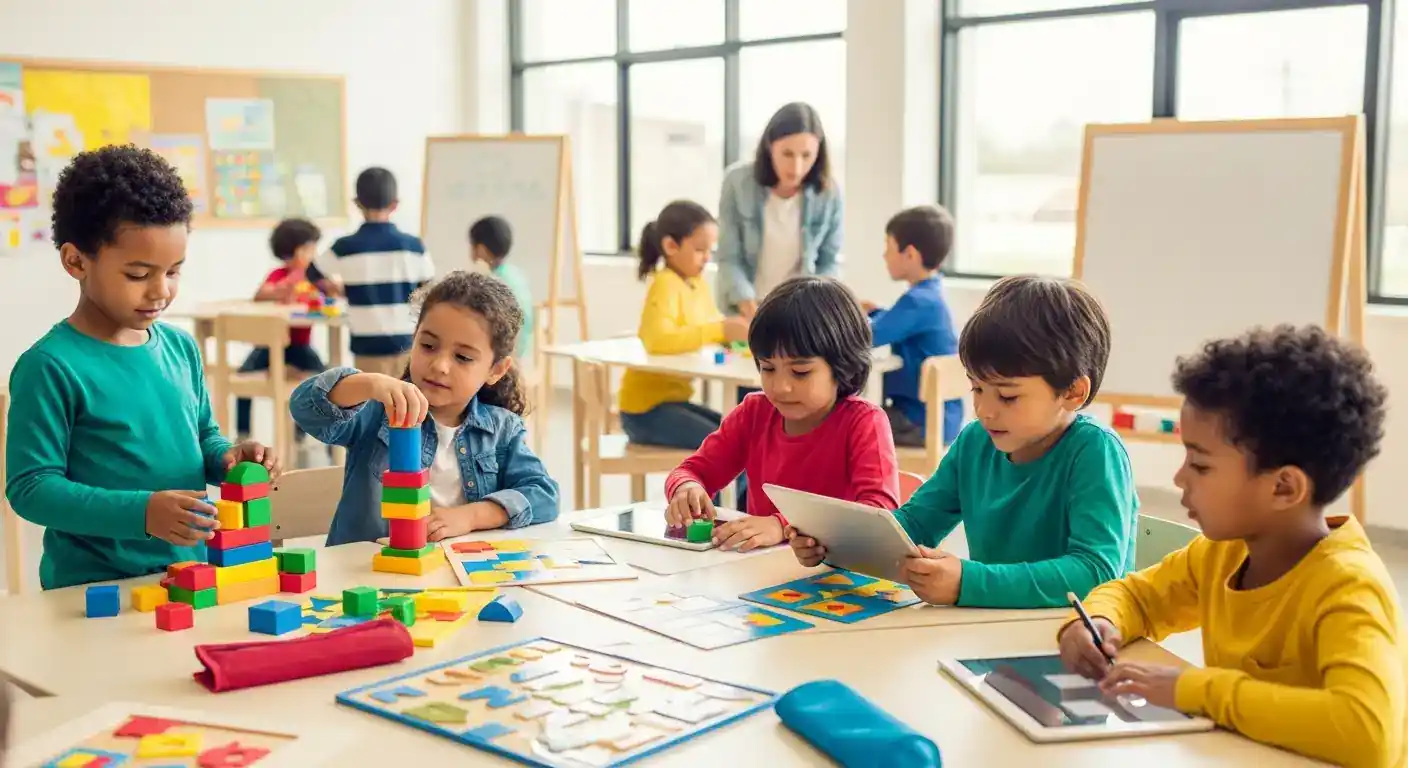
Decoding How Constructivist Theories Shape Active Student Development and Critical Thinking Skills
In today's rapidly evolving educational landscape, understanding how students truly learn and develop is paramount. Traditional models often positioned students as passive recipients of information. However, the paradigm of constructivist theories offers a revolutionary perspective, emphasizing that learners actively construct their own knowledge and understanding. This approach is not merely a pedagogical preference; it's a profound shift that demonstrably enhances active student development and hones crucial critical thinking skills.
This article delves into the core tenets of constructivism, exploring its practical applications and undeniable benefits. We will specifically focus on decoding how constructivist theories shape active student development and critical thinking skills, providing educators and parents with actionable insights into fostering deeper, more meaningful learning experiences.
Key Points:
- Active Knowledge Construction: Students build understanding through direct experience and reflection.
- Enhanced Critical Thinking: Constructivist methods cultivate higher-order cognitive skills like analysis and evaluation.
- Student-Centered Learning: Focus shifts from teacher instruction to student exploration and discovery.
- Collaborative Environments: Interaction with peers and teachers fosters diverse perspectives and deeper insights.
- Real-World Relevance: Learning is contextualized, making concepts more engaging and applicable.
The Foundations of Constructivism: Building Blocks for Active Learning
Constructivism is not a singular theory but a framework encompassing several perspectives, notably those of Jean Piaget and Lev Vygotsky. At its heart, constructivism posits that learning is an active, constructive process where individuals create meaning from their experiences. It moves beyond rote memorization, encouraging students to engage with content, ask questions, and form their own conclusions. This fundamental shift is crucial for genuine active student development.
Piaget's work highlighted how children build mental models, or schemata, to understand the world. When new information is encountered, it's either assimilated into existing schemata or causes accommodation, where schemata are adjusted. Vygotsky, on the other hand, emphasized the social and cultural aspects of learning, introducing concepts like the Zone of Proximal Development (ZPD) and scaffolding. Understanding these foundations is key to decoding how constructivist theories shape active student development effectively.
Applying Constructivist Principles for Enhanced Student Engagement
Implementing constructivist principles transforms classrooms into dynamic hubs of inquiry and discovery. Instead of lectures, educators facilitate activities that challenge students to solve problems, conduct experiments, and engage in meaningful discussions. This approach significantly boosts student engagement because learning becomes a personal journey of exploration rather than a passive reception of facts.
- Problem-Based Learning (PBL): Students work collaboratively to solve open-ended, real-world problems, integrating knowledge from various subjects. This method inherently encourages active student development by placing them in the driver's seat of their learning process.
- Inquiry-Based Learning: Learners formulate questions, investigate topics, and develop their own solutions, fostering curiosity and independent thinking. From my experience working with educators, the most profound shift often occurs when students are given the autonomy to pursue their own questions.
- Experiential Learning: Direct experiences, such as field trips, simulations, or hands-on projects, provide concrete contexts for abstract concepts. According to a 2023 report by the National Center for Education Statistics, schools implementing student-led projects saw a 15% increase in student retention of complex topics compared to traditional methods.
Fostering Critical Thinking Through Constructivist Classrooms
One of the most profound impacts of constructivism is its ability to cultivate robust critical thinking skills. When students are challenged to construct their own understanding, they naturally engage in higher-order thinking processes. They analyze information, evaluate different perspectives, synthesize ideas, and justify their conclusions. This is a crucial aspect of decoding how constructivist theories shape active student development and critical thinking skills.
Traditional methods often test recall; constructivist methods demand analysis and evaluation. For example, rather than simply memorizing historical dates, students in a constructivist classroom might analyze primary source documents, debate historical interpretations, and construct their own narratives. This process hones their ability to discern bias, weigh evidence, and form reasoned judgments. Research published in the International Journal of Cognitive Science in late 2024 highlighted that interactive, problem-solving tasks significantly activate prefrontal cortex regions associated with critical thinking, aligning directly with constructivist learning models.
Strategies for Nurturing Critical Thinking:
- Socratic Questioning: Teachers use open-ended questions to probe student thinking, encouraging deeper reflection and justification of ideas. This technique pushes students beyond superficial answers.
- Debates and Discussions: Structured debates require students to research, articulate arguments, and critically evaluate opposing viewpoints, sharpening their analytical and communication skills.
- Metacognitive Reflection: Encouraging students to think about how they think and learn helps them identify their own biases, assess their problem-solving strategies, and become more self-regulated learners. This reflective practice is central to strengthening critical thinking skills.
The Teacher's Evolving Role: From Lecturer to Facilitator
In a constructivist classroom, the teacher's role shifts dramatically. They are no longer the sole disseminator of knowledge but a guide, facilitator, and provocateur of thought. This role involves:
- Designing Rich Learning Environments: Creating opportunities for exploration, collaboration, and challenge.
- Providing Scaffolding: Offering support that is gradually removed as students gain mastery, helping them navigate their Zone of Proximal Development.
- Encouraging Dialogue: Fostering a safe space where students feel comfortable asking questions, expressing ideas, and even making mistakes.
- Assessing Process as Well as Product: Evaluating not just what students know, but how they came to know it and their problem-solving strategies.
A review in the Journal of Curriculum Development (published early 2025) emphasized that teacher-as-facilitator roles are pivotal in cultivating independent learners, a core tenet of constructivist pedagogy. This supportive, guiding role is essential for decoding how constructivist theories shape active student development.
Addressing Implementation Challenges and Modern Solutions
While the benefits are clear, implementing constructivism fully can present challenges. Large class sizes, standardized testing pressures, and a lack of resources can hinder a full embrace of student-centered approaches. However, modern educational technologies and pedagogical innovations offer solutions:
- Blended Learning Models: Combining online resources with in-person activities can provide personalized learning paths and allow teachers more time for one-on-one facilitation. This allows for scalability in applying constructivist theories.
- Collaborative Digital Tools: Platforms that support group projects, shared document editing, and online discussions can bridge geographical gaps and foster collaboration beyond the physical classroom.
- Professional Development: Ongoing training for educators is crucial to equip them with the skills to design and manage constructivist learning environments effectively. This is where innovation meets practice, refining how we apply constructivist theories in diverse settings.
These solutions highlight a path forward for integrating constructivist theories even within existing systemic constraints, ensuring that the focus remains on active student development. To delve deeper into similar pedagogical innovations, explore more about student-centered learning approaches.
FAQ Section: Understanding Constructivist Learning
What is the main idea behind constructivist theories?
The main idea of constructivist theories is that learners actively build or "construct" their own understanding and knowledge of the world through experiencing things and reflecting on those experiences. It's about making meaning rather than passively receiving information. This active process is fundamental to active student development.
How does constructivism promote critical thinking?
Constructivism promotes critical thinking by requiring students to analyze, interpret, and synthesize information themselves, rather than just memorizing facts. They engage in problem-solving, debates, and inquiry-based activities that challenge them to evaluate evidence, consider different perspectives, and justify their reasoning, all vital for critical thinking skills.
What does a constructivist classroom look like?
A constructivist classroom is typically student-centered and interactive. You'll see students working in groups, engaging in hands-on experiments, conducting research, and participating in discussions. The teacher acts as a facilitator, guiding exploration, asking probing questions, and providing resources rather than lecturing. It's an environment geared towards active student development.
Is constructivism suitable for all age groups?
Yes, constructivism is adaptable across all age groups, from early childhood to adult education. While the specific activities and level of complexity will vary, the core principle of active knowledge construction remains effective. Younger children might engage in play-based learning, while older students tackle complex research projects, all benefitting from constructivist theories.
Conclusion: Empowering Learners Through Constructivism
Decoding how constructivist theories shape active student development and critical thinking skills reveals a powerful educational paradigm. By shifting the focus from passive reception to active construction of knowledge, constructivism empowers students to become independent thinkers, resilient problem-solvers, and engaged citizens. It prepares them not just for tests, but for the complex challenges of life in a rapidly changing world.
Embracing constructivist methods requires a commitment to innovative teaching, continuous professional development, and a belief in the inherent capabilities of every learner. As educators, our role is to cultivate environments where curiosity flourishes, questions are celebrated, and learning is a dynamic, personal journey. Continue your exploration into designing engaging learning experiences and discover more effective teaching methodologies on our teaching methods category page.
Share your thoughts on how constructivist approaches have impacted your learning or teaching experiences in the comments below! We are always eager to hear about real-world applications and insights.
Information Timeliness: This article reflects current educational research and pedagogical trends as of late 2025. Educational methodologies are dynamic; regular updates on new research and practical applications will be considered quarterly to maintain relevance and efficacy. Expandable Subtopics for Future Updates:
- Neuroscience of Constructivism: Exploring the brain science behind active learning.
- Assessing Constructivist Learning: Innovative evaluation methods beyond traditional tests.
- Constructivism in Digital Learning Environments: Adapting principles for online and hybrid classrooms.