Critical Pedagogy: Empowering Students for Social Transformation
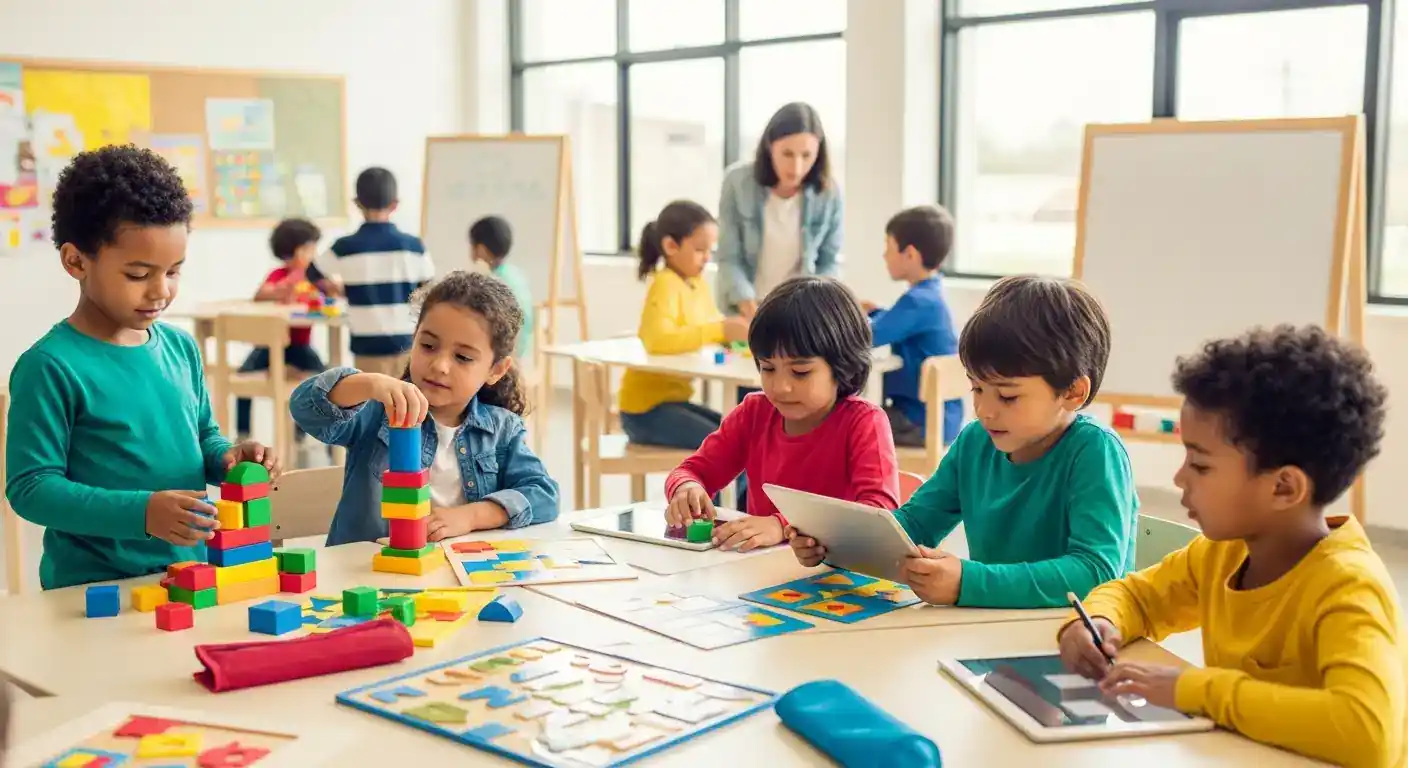
Critical Pedagogy: Empowering Students for Social Transformation
Critical pedagogy is more than just a teaching method; it's a philosophy that views education as a practice of freedom. At its core, it aims to empower students to critically analyze their world, challenge oppressive structures, and actively participate in creating a more just and equitable society. This approach moves beyond traditional rote learning, fostering deep reflection and action. By engaging students as active agents in their own learning, critical pedagogy lays the groundwork for meaningful social transformation. It's about developing a critical consciousness that enables individuals to understand and change their circumstances.
Key Points:
- Empowers Students: Fosters agency and critical thinking.
- Challenges Status Quo: Encourages questioning of societal norms.
- Promotes Social Justice: Aims for equity and liberation.
- Dialogue & Reflection: Central to the learning process.
- Action-Oriented: Connects learning to real-world change.
Understanding the Foundations of Critical Pedagogy
The concept of critical pedagogy is deeply rooted in the work of Brazilian educator Paulo Freire, particularly his seminal book, Pedagogy of the Oppressed. Freire argued against the "banking concept" of education, where teachers deposit knowledge into passive students. Instead, he advocated for a problem-posing education that encourages dialogue and shared inquiry. This approach recognizes students as co-creators of knowledge, rather than empty vessels. The goal is to develop conscientization, a process where individuals become aware of their socio-political realities and their capacity to transform them.
Critical pedagogy emphasizes several core principles:
- Dialogue: Learning is a collaborative process where ideas are exchanged and debated respectfully. This fosters mutual understanding and intellectual growth.
- Praxis: The cyclical process of reflection and action. Students reflect on their experiences and knowledge, then act to change their world, and then reflect again on the outcomes.
- Problem-Posing: Education should present real-world problems for students to analyze and solve, rather than simply transmitting facts. This makes learning relevant and engaging.
- De-centering Authority: The teacher acts as a facilitator, guiding students through inquiry rather than dictating knowledge. This shifts power dynamics in the classroom.
Empowering Students for Critical Engagement and Action
The true power of critical pedagogy lies in its ability to foster genuine student empowerment. When students are encouraged to question, analyze, and challenge, they develop essential skills for navigating a complex world. This approach cultivates critical thinking beyond surface-level understanding, enabling students to dissect information, identify biases, and form well-reasoned opinions. It moves them from being passive recipients of information to active participants in their learning journey and, ultimately, in society.
Through critical pedagogy, students learn to:
- Develop Agency: They gain a sense of control over their learning and their lives. This fosters self-efficacy and motivation.
- Cultivate Voice: Students are given platforms to express their perspectives and experiences, which are valued and respected. This builds confidence and communication skills.
- Understand Power Structures: They learn to identify and analyze systems of power, privilege, and oppression that exist within society. This awareness is crucial for social justice education.
- Engage in Transformative Learning: Learning becomes a process of personal and societal change, where individuals are transformed by their understanding and actions.
Implementing Critical Pedagogy in Diverse Educational Settings
Integrating critical pedagogy into classrooms requires a shift in mindset and methodology for educators. It's not about abandoning curriculum but about approaching it through a critical lens. Strategies often involve creating learning environments where students feel safe to express diverse viewpoints and challenge existing norms. For instance, project-based learning that addresses local community issues can be a powerful tool. Students might research environmental injustices in their neighborhood and propose solutions, directly connecting classroom learning to social transformation.
Effective implementation strategies include:
- Community-Based Projects: Engaging students in real-world issues within their local communities. This provides authentic learning experiences.
- Socratic Seminars and Debates: Facilitating structured discussions that encourage deep questioning and critical analysis of texts or concepts.
- Curriculum Interrogation: Encouraging students to question the narratives presented in textbooks and media, seeking out alternative perspectives.
- Reflective Journals: Providing opportunities for students to process their learning, emotions, and connections to broader social issues.
A 2024 study published in the Journal of Educational Research highlighted that educators who successfully integrate critical pedagogy often prioritize dialogic instruction and create opportunities for students to engage with controversial topics respectfully. This approach significantly enhances student engagement and civic participation.
Critical Pedagogy and Social Transformation: Real-World Impact
The ultimate aim of critical pedagogy is to prepare students not just for academic success, but for active citizenship and social transformation. When students are empowered to critically analyze societal problems, they are better equipped to become agents of change. Consider the case of a high school class that studied food deserts in their city. Through critical inquiry and community engagement, they didn't just learn about the problem; they organized a community garden initiative, demonstrating how critical pedagogy fosters social change. This kind of experiential learning makes abstract concepts tangible and actionable.
Recent trends indicate a growing emphasis on integrating critical pedagogy with digital literacy, enabling students to critically evaluate online information and participate in digital activism. This allows them to extend their transformative efforts beyond the classroom walls. For more information on this topic, readers can explore related articles on digital citizenship and educational technology.
Navigating Challenges and Fostering Growth in Critical Pedagogy
While the benefits of critical pedagogy are profound, its implementation is not without challenges. Educators may face resistance from traditional educational structures, curriculum constraints, or a lack of adequate professional development. Shifting from a teacher-centered to a student-centered, dialogic approach requires significant training and support. Furthermore, addressing sensitive social issues in the classroom demands skillful facilitation and a deep understanding of diverse student backgrounds.
A report from the National Council of Teachers of English (2023) emphasized the critical need for ongoing professional development that equips educators with the tools to implement critical pedagogy effectively and inclusively. This includes training in conflict resolution, culturally responsive teaching, and facilitating difficult conversations. Institutional support, including administrative buy-in and resources, is crucial for successful integration. Without this, even the most passionate educators may struggle to fully realize the potential of critical pedagogy.
Frequently Asked Questions (FAQ)
What is the main goal of critical pedagogy?
The primary goal of critical pedagogy is to empower students to critically analyze societal structures, challenge injustices, and actively participate in transforming their world. It aims to develop a critical consciousness, enabling individuals to understand their social realities and work towards a more equitable society. This goes beyond mere knowledge acquisition, focusing on action and liberation.
How does critical pedagogy differ from traditional education?
Critical pedagogy fundamentally differs from traditional "banking" education by rejecting the idea of students as passive recipients of knowledge. Instead, it promotes active dialogue, problem-posing, and shared inquiry. Traditional methods often prioritize rote memorization and teacher authority, whereas critical pedagogy emphasizes student agency, critical thinking, and the teacher as a facilitator of learning.
Can critical pedagogy be applied in all subjects?
Yes, critical pedagogy can be effectively applied across all subjects, from science and mathematics to humanities and arts. In science, it might involve critically examining the ethics of scientific research; in history, questioning dominant narratives. The core principles of critical inquiry, dialogue, and connecting learning to real-world issues are universally applicable, fostering deeper understanding and engagement.
What role does the teacher play in critical pedagogy?
In critical pedagogy, the teacher acts as a facilitator, co-learner, and guide rather than a sole authority figure. Their role involves creating a safe and inclusive learning environment, posing challenging questions, fostering dialogue, and encouraging students to critically analyze information. They support students in developing their own voices and taking action for social change.
Conclusion: Cultivating Agents of Change
Critical pedagogy offers a powerful framework for education that transcends the mere transmission of facts. It is a dynamic approach focused on empowering students for social transformation, equipping them with the tools to critically examine their world and act as agents of change. By fostering dialogue, critical reflection, and praxis, educators can cultivate a generation of informed, engaged, and socially conscious individuals. Embracing critical pedagogy means committing to an educational journey that prioritizes equity, justice, and human liberation.
We encourage you to share your thoughts and experiences with critical pedagogy in the comments below. How has this approach impacted your teaching or learning? For further exploration, consider delving into resources on emancipatory education or student-centered learning methodologies. Future discussions could explore specific assessment methods within critical pedagogy or its application in adult education.